


 Cart
Cart
 sales@molnova.com


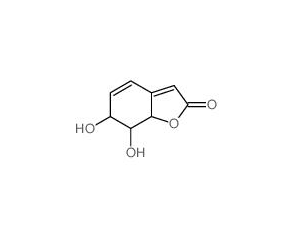
griffonilide
CAS No. 61371-55-9
griffonilide( —— )
Catalog No. M18901 CAS No. 61371-55-9
Griffonilide is an extract from the Semiaquilegia adoxoides root, a traditional anticancer herb.
Purity : >98% (HPLC)
 COA
Datasheet
HNMR
HPLC
MSDS
Handing Instructions
COA
Datasheet
HNMR
HPLC
MSDS
Handing Instructions
| Size | Price / USD | Stock | Quantity |
| 5MG | 101 | In Stock |


|
| 10MG | 149 | In Stock |
|
| 25MG | 249 | In Stock |
|
| 50MG | 357 | In Stock |
|
| 100MG | Get Quote | In Stock |
|
| 200MG | Get Quote | In Stock |
|
| 500MG | Get Quote | In Stock |
|
| 1G | Get Quote | In Stock |
|
Biological Information
-
Product Namegriffonilide
-
NoteResearch use only, not for human use.
-
Brief DescriptionGriffonilide is an extract from the Semiaquilegia adoxoides root, a traditional anticancer herb.
-
DescriptionGriffonilide is an extract from the Semiaquilegia adoxoides root, a traditional anticancer herb.
-
In Vitro——
-
In Vivo——
-
Synonyms——
-
PathwayOthers
-
TargetOther Targets
-
RecptorOthers
-
Research Area——
-
Indication——
Chemical Information
-
CAS Number61371-55-9
-
Formula Weight168.15
-
Molecular FormulaC8H8O4
-
Purity>98% (HPLC)
-
SolubilityIn Vitro:?DMSO : 100 mg/mL (594.71 mM)
-
SMILESO1C(=O)C=C2[C@H]1[C@H]([C@@H](C=C2)O)O
-
Chemical Name——
Shipping & Storage Information
-
Storage(-20℃)
-
ShippingWith Ice Pack
-
Stability≥ 2 years
Reference
1. Chingwaru W,et al. Therapeutic and Prophylactic Potential of Morama (Tylosema esculentum): A Review. Phytother Res. 2015 Oct;29(10):1423-38.
molnova catalog



related products
-
Epiaschantin
(+)-Epiaschantin shows marginal cancer cell line inhibitory activities. It also has anti-platelet aggregation activity.
-
LTI-291
LTI-291 is a glucocerebrosidase (Gcase) activator.
-
1-Methyl-2-pentyl-4(...
1-Methyl-2-pentyl-4(1H)-quinolinone is a natural product.
