


 Cart
Cart
 sales@molnova.com


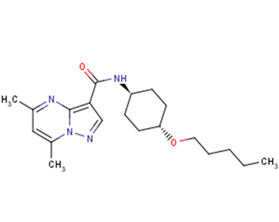
LTI-291
CAS No. 1919820-28-2
LTI-291( LTI-291 | LTI 291 | LTI291 )
Catalog No. M18176 CAS No. 1919820-28-2
LTI-291 is a glucocerebrosidase (Gcase) activator.
Purity : >98% (HPLC)
 COA
Datasheet
HNMR
HPLC
MSDS
Handing Instructions
COA
Datasheet
HNMR
HPLC
MSDS
Handing Instructions
| Size | Price / USD | Stock | Quantity |
| 1 mL x 10 mM in DMSO | 102 | In Stock |


|
| 2MG | 55 | In Stock |
|
| 5MG | 92 | In Stock |
|
| 10MG | 148 | In Stock |
|
| 25MG | 297 | In Stock |
|
| 50MG | 461 | In Stock |
|
| 100MG | 709 | In Stock |
|
| 200MG | 918 | In Stock |
|
| 500MG | Get Quote | In Stock |
|
| 1G | Get Quote | In Stock |
|
Biological Information
-
Product NameLTI-291
-
NoteResearch use only, not for human use.
-
Brief DescriptionLTI-291 is a glucocerebrosidase (Gcase) activator.
-
DescriptionLTI-291 is a glucocerebrosidase (Gcase) activator for treatment of Parkinson's disease (PD).
-
In Vitro——
-
In Vivo——
-
SynonymsLTI-291 | LTI 291 | LTI291
-
PathwayOthers
-
TargetOther Targets
-
Recptorβ-glucosidase
-
Research AreaNeurological Disease
-
Indication——
Chemical Information
-
CAS Number1919820-28-2
-
Formula Weight358.49
-
Molecular FormulaC20H30N4O2
-
Purity>98% (HPLC)
-
SolubilityDMSO : 50 mg/mL 139.48 mM;
-
SMILESO=C(C1=C2N=C(C)C=C(C)N2N=C1)N[C@H]3CC[C@H](OCCCCC)CC3
-
Chemical Name5,7-Dimethyl-pyrazolo[1,5-a]pyrimidine-3-carboxylic acid (trans-4-pentyloxy-cyclohexyl)-amide
Shipping & Storage Information
-
Storage(-20℃)
-
ShippingWith Ice Pack
-
Stability≥ 2 years
Reference
1.Renato T. Skerlj, et al. Methods of treatment and combination therapies using gcase activator heterobicyclic and related compounds. WO 2017192841 A1.
molnova catalog



related products
-
2-(5,7-dichloro-1H-i...
2-(5,7-dichloro-1H-indol-3-yl)ethan-1-amine is a chemical compound.
-
Lactose b
Lactose is the major sugar present in milk and the main source of energy supplied to the newborn mammalian in its mother's milk. Lactose is also an important osmotic regulator of lactation.
-
Nuclear Export Signa...
Nuclear Export Signal, NES, PKI
