


 Cart
Cart
 sales@molnova.com


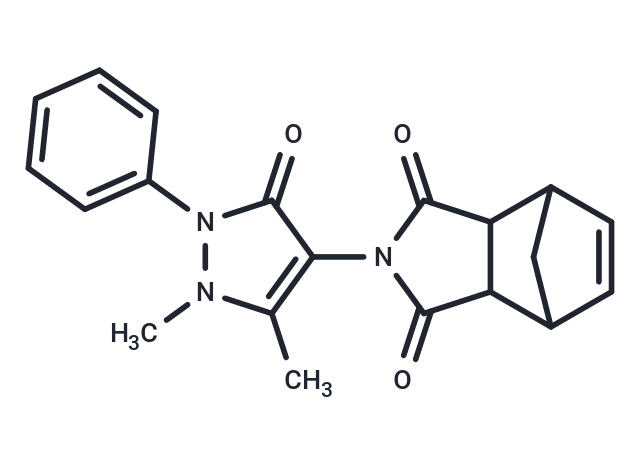
ZIM
CAS No. 301298-87-3
ZIM( —— )
Catalog No. M36395 CAS No. 301298-87-3
ZIM, a norbornene derivative of 4-Aminoantipyrine, effectively induces DNA damage, leading to genomic and chromosomal alterations, cell death, and phagocytosis activation.
Purity : >98% (HPLC)
 COA
Datasheet
HNMR
HPLC
MSDS
Handing Instructions
COA
Datasheet
HNMR
HPLC
MSDS
Handing Instructions
| Size | Price / USD | Stock | Quantity |
| 5MG | 52 | Get Quote |


|
| 10MG | 85 | Get Quote |
|
| 25MG | 164 | Get Quote |
|
| 50MG | 272 | Get Quote |
|
| 100MG | 428 | Get Quote |
|
| 500MG | Get Quote | Get Quote |
|
| 1G | Get Quote | Get Quote |
|
Biological Information
-
Product NameZIM
-
NoteResearch use only, not for human use.
-
Brief DescriptionZIM, a norbornene derivative of 4-Aminoantipyrine, effectively induces DNA damage, leading to genomic and chromosomal alterations, cell death, and phagocytosis activation.
-
DescriptionZIM, a norbornene derived from 4-Aminoantipyrine, is a potent inducer of DNA damage, causing genomic and chromosomal damage as well as inducing cell death and activating phagocytosis. ZIM has chemotherapeutic potential for use in cancer research.
-
In Vitro——
-
In Vivo——
-
Synonyms——
-
PathwayCell Cycle/DNA Damage
-
TargetDNA/RNA Synthesis
-
RecptorDNA/RNA Synthesis
-
Research Area——
-
Indication——
Chemical Information
-
CAS Number301298-87-3
-
Formula Weight349.38
-
Molecular FormulaC20H19N3O3
-
Purity>98% (HPLC)
-
SolubilityIn Vitro:?DMSO : 50 mg/mL (143.11 mM; Ultrasonic (<60°C)
-
SMILESCN1N(C(=O)C(N2C(=O)C3C4CC(C=C4)C3C2=O)=C1C)C1=CC=CC=C1
-
Chemical Name——
Shipping & Storage Information
-
Storage(-20℃)
-
ShippingWith Ice Pack
-
Stability≥ 2 years
Reference
1. Rodrigo Juliano Oliveira, et al. ZIM, a Norbornene Derived from 4-Aminoantipyrine, Induces DNA Damage and Cell Death but in Association Reduces the Effect of Commercial Chemotherapeutics. Chem Res Toxicol. 2022 Dec 22.??
molnova catalog



related products
-
Emzadirib
Emzadirib (RAD51-IN-2) is a potent inhibitor of RAD51, showing potential anticancer activity and useful for studying DNA damage repair.
-
Cerevisterol
Cerevisterol is a cytotoxic steroid, can inhibit the activity of DNA polymerase alpha. It can stimulate NGF-mediated neurite outgrowth on PC12 cells.
-
TH-588
A potent and selective inhibitor of MTH1 protein with IC50 of 5 nM.
