


 Cart
Cart
 sales@molnova.com


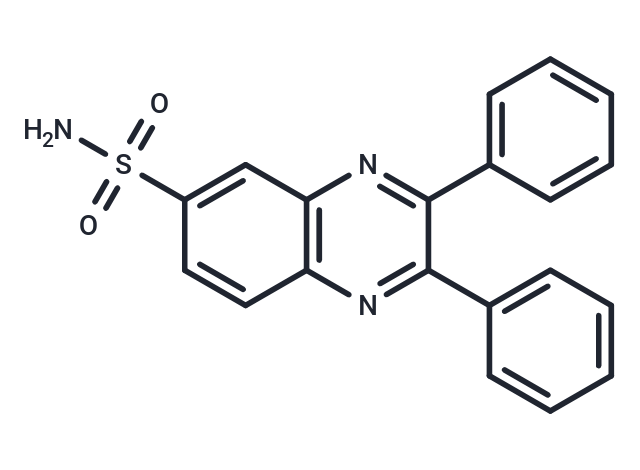
WAY-604663
CAS No. 380347-87-5
WAY-604663( —— )
Catalog No. M36984 CAS No. 380347-87-5
WAY-604663 (2,3-diphenylquinoxaline-6-sulfonamide) may have antibacterial analgesic and anti-inflammatory activities.
Purity : >98% (HPLC)
 COA
Datasheet
HNMR
HPLC
MSDS
Handing Instructions
COA
Datasheet
HNMR
HPLC
MSDS
Handing Instructions
| Size | Price / USD | Stock | Quantity |
| 2MG | 296 | Get Quote |


|
| 5MG | 409 | Get Quote |
|
| 10MG | 604 | Get Quote |
|
| 25MG | 908 | Get Quote |
|
| 50MG | 1251 | Get Quote |
|
| 100MG | 1647 | Get Quote |
|
| 500MG | 3312 | Get Quote |
|
| 1G | Get Quote | Get Quote |
|
Biological Information
-
Product NameWAY-604663
-
NoteResearch use only, not for human use.
-
Brief DescriptionWAY-604663 (2,3-diphenylquinoxaline-6-sulfonamide) may have antibacterial analgesic and anti-inflammatory activities.
-
DescriptionWAY-604663 (2,3-diphenylquinoxaline-6-sulfonamide) may have antibacterial analgesic and anti-inflammatory activities.
-
In Vitro——
-
In Vivo——
-
Synonyms——
-
PathwayMicrobiology/Virology
-
TargetAntibiotic
-
RecptorAntibiotic
-
Research Area——
-
Indication——
Chemical Information
-
CAS Number380347-87-5
-
Formula Weight361.42
-
Molecular FormulaC20H15N3O2S
-
Purity>98% (HPLC)
-
Solubility——
-
SMILESS(N)(=O)(=O)C1=CC=2N=C(C(=NC2C=C1)C3=CC=CC=C3)C4=CC=CC=C4
-
Chemical Name——
Shipping & Storage Information
-
Storage(-20℃)
-
ShippingWith Ice Pack
-
Stability≥ 2 years
Reference
molnova catalog



related products
-
Temafloxacin
Temafloxacin is an antibiotic and antimycobacterial agent. It used to treat lower respiratory tract infections, genital and urinary infections like prostatitis, and skin infections.
-
Gentamicin
Gentamicin (Centicin) is a broad-spectrum aminoglycoside antibiotic with antibacterial activity, inhibiting the growth of Gram-positive and Gram-negative bacteria, and can be used to study ocular infections.
-
Troleandomycin
Troleandomycin (Triacetyloleandomycin), a macrolide antibiotic, is an orally active and specific CYP3A inhibitor that induces mnemonic speech, induces prolonged cholestasis, and can be used in the study of asthma.
