


 Cart
Cart
 sales@molnova.com


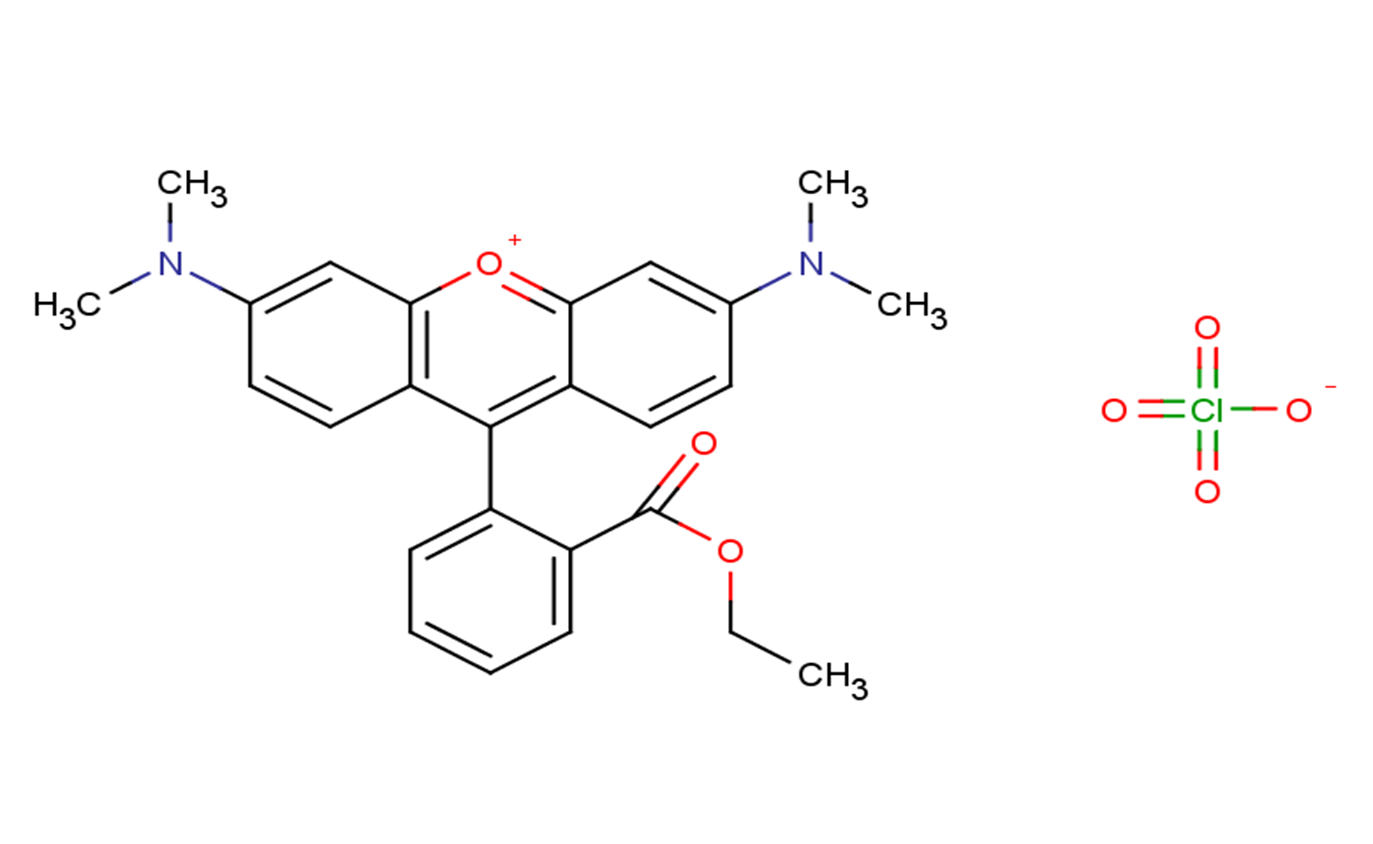
TMRE
CAS No. 115532-52-0
TMRE( Tetramethylrhodamine ethyl ester perchlorate )
Catalog No. M23333 CAS No. 115532-52-0
TMRE is a mitochondria specific dye (λex: 550 nm, λem: 575 nm).
Purity : >98% (HPLC)
 COA
Datasheet
HNMR
HPLC
MSDS
Handing Instructions
COA
Datasheet
HNMR
HPLC
MSDS
Handing Instructions
| Size | Price / USD | Stock | Quantity |
| 5MG | 38 | In Stock |


|
| 10MG | 52 | In Stock |
|
| 100MG | Get Quote | In Stock |
|
| 200MG | Get Quote | In Stock |
|
| 500MG | Get Quote | In Stock |
|
| 1G | Get Quote | In Stock |
|
Biological Information
-
Product NameTMRE
-
NoteResearch use only, not for human use.
-
Brief DescriptionTMRE is a mitochondria specific dye (λex: 550 nm, λem: 575 nm).
-
DescriptionTMRE is a mitochondria specific dye (λex: 550 nm, λem: 575 nm).
-
In Vitro——
-
In Vivo——
-
SynonymsTetramethylrhodamine ethyl ester perchlorate
-
PathwayOthers
-
TargetOther Targets
-
RecptorOthers
-
Research Area——
-
Indication——
Chemical Information
-
CAS Number115532-52-0
-
Formula Weight514.95
-
Molecular FormulaC26H27ClN2O7
-
Purity>98% (HPLC)
-
SolubilityDMSO:27.78 mg/mL (53.95 mM; Need ultrasonic)
-
SMILESO=C(C1=CC=CC=C1C2=C3C=CC(N(C)C)=CC3=[O+]C4=C2C=CC(N(C)C)=C4)OCC.O=Cl(=O)([O-])=O
-
Chemical Name——
Shipping & Storage Information
-
Storage(-20℃)
-
ShippingWith Ice Pack
-
Stability≥ 2 years
Reference
1.Crowley LC, et al. Measuring Mitochondrial Transmembrane Potential by TMRE Staining. Cold Spring Harb Protoc. 2016 Dec 1;2016(12):pdb.prot087361.
molnova catalog



related products
-
BPK-29 hydrochloride
BPK-29 hydrochloride is a specific ligand that disrupts the atypical orphan nuclear receptor NR0B1-protein interactions by covalently modifying C274.
-
Tenivastatin
Tenivastatin (Simvastatin acid) is an anti-hyperlipidemic HMG-CoA reductase inhibitor that inhibits the production of reactive oxygen species (ROS) and can be used in the study of primary hyperlipidemia.
-
EB-47
EB-47 mimics the substrate NAD+ and extends from the nicotinamide to the adenosine subsite.EB-47, a potent and selective PARP-1/ARTD-1 inhibitor with an IC50 value of 45 nM.
