


 Cart
Cart
 sales@molnova.com


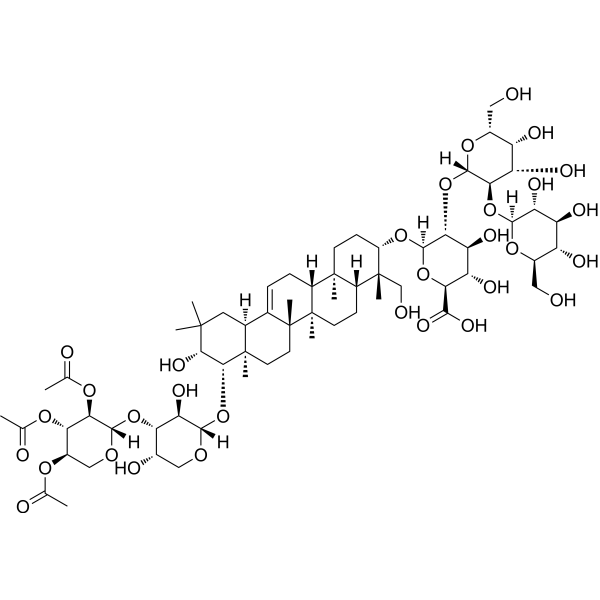
Soyasaponin Aa
CAS No. 117230-33-8
Soyasaponin Aa( —— )
Catalog No. M31165 CAS No. 117230-33-8
Soyasaponin Aa and soyasaponin Ab dose-dependently markedly inhibit adipocyte differentiation and expression of various adipogenic marker genes, through the downregulation of the adipogenesis-related transcription factors PPARγ and C/EBPα± in 3T3-L1 adipocytes.
Purity : >98% (HPLC)
 COA
Datasheet
HNMR
HPLC
MSDS
Handing Instructions
COA
Datasheet
HNMR
HPLC
MSDS
Handing Instructions
| Size | Price / USD | Stock | Quantity |
| 10MG | 198 | In Stock |


|
| 50MG | Get Quote | In Stock |
|
| 100MG | Get Quote | In Stock |
|
Biological Information
-
Product NameSoyasaponin Aa
-
NoteResearch use only, not for human use.
-
Brief DescriptionSoyasaponin Aa and soyasaponin Ab dose-dependently markedly inhibit adipocyte differentiation and expression of various adipogenic marker genes, through the downregulation of the adipogenesis-related transcription factors PPARγ and C/EBPα± in 3T3-L1 adipocytes.
-
DescriptionSoyasaponin Aa and soyasaponin Ab dose-dependently markedly inhibit adipocyte differentiation and expression of various adipogenic marker genes, through the downregulation of the adipogenesis-related transcription factors PPARγ and C/EBPα± in 3T3-L1 adipocytes.
-
In Vitro——
-
In Vivo——
-
Synonyms——
-
PathwayOthers
-
TargetOther Targets
-
Recptor——
-
Research Area——
-
Indication——
Chemical Information
-
CAS Number117230-33-8
-
Formula Weight1365.46
-
Molecular FormulaC64H100O31
-
Purity>98% (HPLC)
-
Solubility——
-
SMILES——
-
Chemical Name——
Shipping & Storage Information
-
Storage(-20℃)
-
ShippingWith Ice Pack
-
Stability≥ 2 years
Reference
molnova catalog



related products
-
GPC3 (144 - 152)
GPC3 (144 - 152)
-
CP-316819
CP-316819 (GPi 819) is a potent inhibitor of glycogen phosphorylase (GPase) with hypoglycemic effects, inhibits huSMGPa and huLGPa, maintains neuronal activity during hypoglycemia, and can be used in the study of hyperglycemia.
-
L-Selenocystine
L-Selenocystine can be used as a building block in biologically active selenol compounds.
