


 Cart
Cart
 sales@molnova.com


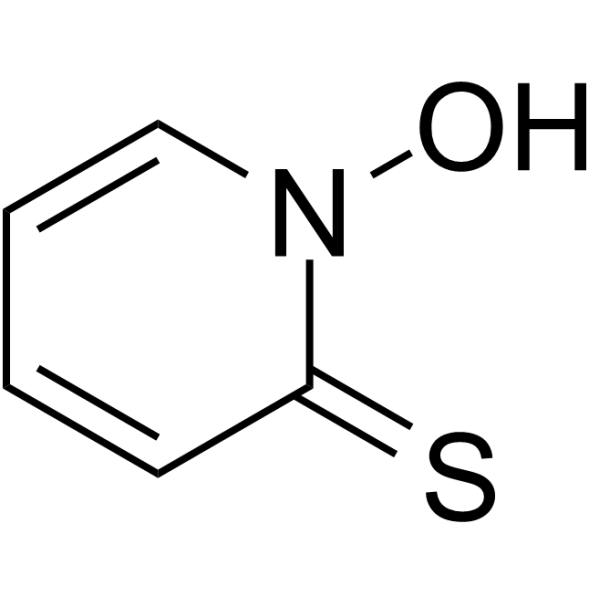
Pyrithione
CAS No. 1121-30-8
Pyrithione( 1-hydroxyl-1H-pyridine-2-thione )
Catalog No. M26402 CAS No. 1121-30-8
Pyrithione is a transition metal complex, a zinc ionophore, that causes elevated zinc levels in mammalian cells. Pyrithione has potent bactericidal and antifungal activity.
Purity : >98% (HPLC)
 COA
Datasheet
HNMR
HPLC
MSDS
Handing Instructions
COA
Datasheet
HNMR
HPLC
MSDS
Handing Instructions
| Size | Price / USD | Stock | Quantity |
| 5MG | 37 | Get Quote |


|
| 10MG | 51 | Get Quote |
|
| 25MG | 78 | Get Quote |
|
| 50MG | 104 | Get Quote |
|
| 100MG | 141 | Get Quote |
|
| 200MG | Get Quote | Get Quote |
|
| 500MG | Get Quote | Get Quote |
|
| 1G | Get Quote | Get Quote |
|
Biological Information
-
Product NamePyrithione
-
NoteResearch use only, not for human use.
-
Brief DescriptionPyrithione is a transition metal complex, a zinc ionophore, that causes elevated zinc levels in mammalian cells. Pyrithione has potent bactericidal and antifungal activity.
-
DescriptionPyrithione is a transition metal complex, a zinc ionophore, that causes elevated zinc levels in mammalian cells. Pyrithione has potent bactericidal and antifungal activity.
-
In Vitro——
-
In Vivo——
-
Synonyms1-hydroxyl-1H-pyridine-2-thione
-
PathwayOthers
-
TargetOther Targets
-
Recptor——
-
Research Area——
-
Indication——
Chemical Information
-
CAS Number1121-30-8
-
Formula Weight127.16
-
Molecular FormulaC5H5NOS
-
Purity>98% (HPLC)
-
SolubilityIn Vitro:?DMSO : 125 mg/mL (983.01 mM)
-
SMILESOn1ccccc1=S
-
Chemical Name——
Shipping & Storage Information
-
Storage(-20℃)
-
ShippingWith Ice Pack
-
Stability≥ 2 years
Reference
1.Suzanne AKERS-RODRIGUEZLeslie W. Tari. Compositions and methods for the treatment of human immunodeficiency virus.WO2021081515A2
molnova catalog



related products
-
Nurulimab
Nurulimab (BCD-145) is an anti-cytotoxic T-lymphocyte antigen 4 (CTLA-4) human monoclonal antibody with anti-cancer activity for the study of skin and musculoskeletal diseases.
-
(1R)-(?)-Myrtenal ...
(1R)-(?)-Myrtenal ameliorates hyperglycemia by enhancing GLUT2 through Akt in the skeletal muscle and liver of diabetic rats.
-
PEG300
PEG300 is a neutral polymer of molecular weight 300, is a water-soluble, low immunogenic and biocompatible polymer formed by repeating units of ethylene glycol.
