


 Cart
Cart
 sales@molnova.com


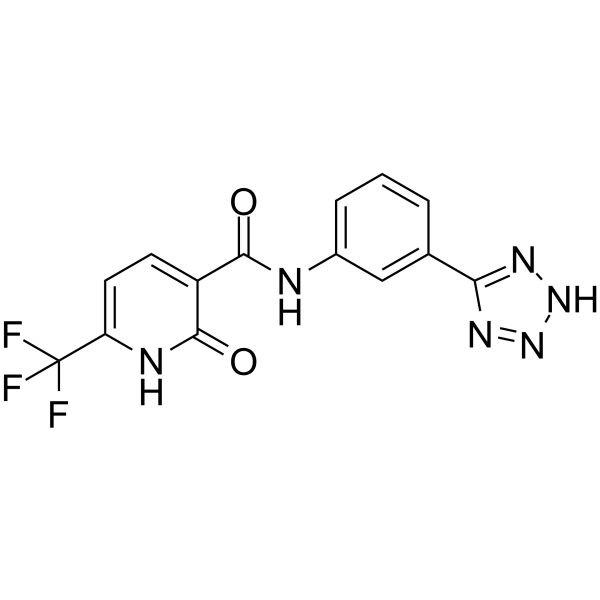
NRX-1933
CAS No. 2763260-30-4
NRX-1933( —— )
Catalog No. M28501 CAS No. 2763260-30-4
NRX-1933 is a molecular glue and enhances the interaction between an oncogenic transcription factor, β-Catenin, and its cognate E3 ligase, SCFβ-TrCP.
Purity : >98% (HPLC)
 COA
Datasheet
HNMR
HPLC
MSDS
Handing Instructions
COA
Datasheet
HNMR
HPLC
MSDS
Handing Instructions
| Size | Price / USD | Stock | Quantity |
| 5MG | 295 | Get Quote |


|
| 10MG | 475 | Get Quote |
|
| 25MG | 773 | Get Quote |
|
| 50MG | 1071 | Get Quote |
|
| 100MG | 1422 | Get Quote |
|
| 200MG | Get Quote | Get Quote |
|
| 500MG | Get Quote | Get Quote |
|
| 1G | Get Quote | Get Quote |
|
Biological Information
-
Product NameNRX-1933
-
NoteResearch use only, not for human use.
-
Brief DescriptionNRX-1933 is a molecular glue and enhances the interaction between an oncogenic transcription factor, β-Catenin, and its cognate E3 ligase, SCFβ-TrCP.
-
DescriptionNRX-1933 is a molecular glue and enhances the interaction between an oncogenic transcription factor, β-Catenin, and its cognate E3 ligase, SCFβ-TrCP.
-
In Vitro——
-
In Vivo——
-
Synonyms——
-
PathwayOthers
-
TargetOther Targets
-
Recptor——
-
Research Area——
-
Indication——
Chemical Information
-
CAS Number2763260-30-4
-
Formula Weight350.26
-
Molecular FormulaC14H9F3N6O2
-
Purity>98% (HPLC)
-
SolubilityIn Vitro:?DMSO : 83.33 mg/mL (237.91 mM)
-
SMILESO=C(NC1=CC=CC(=C1)C2=NN=NN2)C3=CC=C(NC3=O)C(F)(F)F
-
Chemical Name——
Shipping & Storage Information
-
Storage(-20℃)
-
ShippingWith Ice Pack
-
Stability≥ 2 years
Reference
molnova catalog



related products
-
2-O-(α-D-Glucopyrano...
2-O-(α-D-Glucopyranosyl)glycerol (2-alphaGG) is present in certain bacteria and plants that thrive in harsh environments and may extend the lifespan of budding yeast and erythrosporidium by enhancing their osmotic response.
-
Triumbelletin
Triumbelletin is a tricoumarin rhamnopyranoside obtained from Wikstroemia indica with antitumour activity for the study of tumours.
-
L(+)-Ornithine hydro...
L-ornithine hydrochloride has an antifatigue effect by increasing the efficiency of energy consumption and promoting the excretion of ammonia. It is one of the key reactants in the urea cycle.
