


 Cart
Cart
 sales@molnova.com


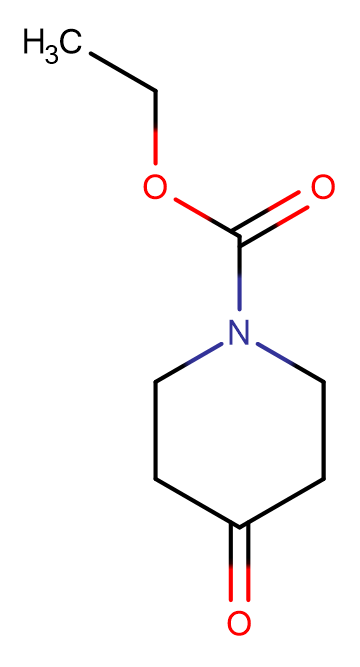
N-Carbethoxy-4-piperidone
CAS No. 29976-53-2
N-Carbethoxy-4-piperidone( —— )
Catalog No. M13925 CAS No. 29976-53-2
Aminopyrimidine derivatives, processes for their preparation, compositions containing them and their use as pharmaceuticals.
Purity : >98% (HPLC)
 COA
Datasheet
HNMR
HPLC
MSDS
Handing Instructions
COA
Datasheet
HNMR
HPLC
MSDS
Handing Instructions
| Size | Price / USD | Stock | Quantity |
| 1G | 26 | In Stock |


|
Biological Information
-
Product NameN-Carbethoxy-4-piperidone
-
NoteResearch use only, not for human use.
-
Brief DescriptionAminopyrimidine derivatives, processes for their preparation, compositions containing them and their use as pharmaceuticals.
-
DescriptionAminopyrimidine derivatives, processes for their preparation, compositions containing them and their use as pharmaceuticals.
-
In VitroN-Carbethoxy-4-piperidone (piperidinone 4) shows toxicity to C. dubia, B. calyciflorus and P. subcapitata.
-
In Vivo——
-
Synonyms——
-
PathwayOthers
-
TargetOther Targets
-
RecptorOthers
-
Research Area——
-
Indication——
Chemical Information
-
CAS Number29976-53-2
-
Formula Weight171.19
-
Molecular FormulaC8H13NO3
-
Purity>98% (HPLC)
-
SolubilityLimited solubility
-
SMILESCCOC(=O)N1CCC(=O)CC1
-
Chemical Name——
Shipping & Storage Information
-
Storage(-20℃)
-
ShippingWith Ice Pack
-
Stability≥ 2 years
Reference
1.Eric Gundersen et al.Bioorganic & Medicinal Chemistry Letters, 15(7), 1891-1894 (2005)
molnova catalog



related products
-
Stearamide
Stearamide(Stearic acid amide) is a primary fatty acid amide that is cytotoxic and fish toxic and can be used to increase the properties of nanoparticles.
-
Neuropeptide S (huma...
Potent endogenous neuropeptide S receptor agonist (EC50 = 9.4 nM). Increases locomotor activity and wakefulness in mice. Also reduces anxiety-like behavior in mice.
-
N-Isovalerylglycine
Isovalerylglycine (IVG) is an acyl glycine. Acyl glycines are normally minor metabolites of fatty acids. However the excretion of certain acyl glycines is increased in several inborn errors of metabolism. In certain cases the measurement of these metabolites in body fluids can be used to diagnose disorders associated with mitochondrial fatty acid beta-oxidation.
