


 Cart
Cart
 sales@molnova.com


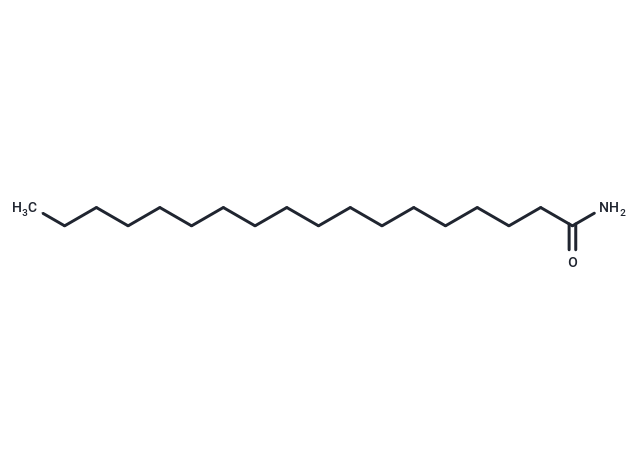
Stearamide
CAS No. 124-26-5
Stearamide( —— )
Catalog No. M33655 CAS No. 124-26-5
Stearamide(Stearic acid amide) is a primary fatty acid amide that is cytotoxic and fish toxic and can be used to increase the properties of nanoparticles.
Purity : >98% (HPLC)
 COA
Datasheet
HNMR
HPLC
MSDS
Handing Instructions
COA
Datasheet
HNMR
HPLC
MSDS
Handing Instructions
| Size | Price / USD | Stock | Quantity |
| 100MG | Get Quote | In Stock |


|
| 200MG | 33 | In Stock |
|
| 500MG | 52 | In Stock |
|
| 1G | 75 | In Stock |
|
Biological Information
-
Product NameStearamide
-
NoteResearch use only, not for human use.
-
Brief DescriptionStearamide(Stearic acid amide) is a primary fatty acid amide that is cytotoxic and fish toxic and can be used to increase the properties of nanoparticles.
-
DescriptionStearamide is a primary fatty acid amide. Stearamide displays cytotoxic and ichthytoxic activity.
-
In Vitro——
-
In Vivo——
-
Synonyms——
-
PathwayOthers
-
TargetOther Targets
-
RecptorOthers
-
Research Area——
-
Indication——
Chemical Information
-
CAS Number124-26-5
-
Formula Weight283.49
-
Molecular FormulaC18H37NO
-
Purity>98% (HPLC)
-
Solubility——
-
SMILESCCCCCCCCCCCCCCCCCC(N)=O
-
Chemical Name——
Shipping & Storage Information
-
Storage(-20℃)
-
ShippingWith Ice Pack
-
Stability≥ 2 years
Reference
1. Matthew J.Bertin, et al. Identification of toxic fatty acid amides isolated from the harmful alga Prymnesium parvum carter.
molnova catalog



related products
-
Allocholic acid
Allocholic acid is a major component in bile from the river carpsucker, Carpiodes carpio.
-
Arillanin A
Arillanin A is an oligosaccharide ester isolated from Polygala arillata.
-
G3-C12 TFA (848301-9...
G3-C12 TFA Salt is a specific galectin-3 binding peptide with Ksubdsub of 88 nM and shows anticancer activity.
