


 Cart
Cart
 sales@molnova.com


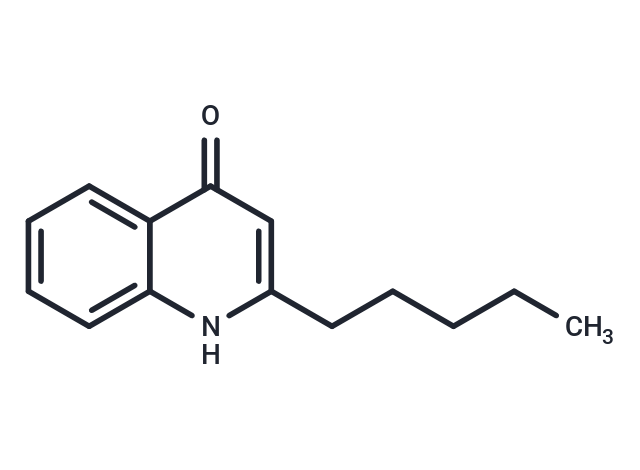
Pseudane V
CAS No. 109072-26-6
Pseudane V( —— )
Catalog No. M37824 CAS No. 109072-26-6
Pseudane V (2-pentylquinolin-4-ol) is a marine derived natural products found in Pseudoalteromonas sp. M2.
Purity : >98% (HPLC)
 COA
Datasheet
HNMR
HPLC
MSDS
Handing Instructions
COA
Datasheet
HNMR
HPLC
MSDS
Handing Instructions
| Size | Price / USD | Stock | Quantity |
| 1 mL x 10 mM in DMSO | 359 | In Stock |


|
| 2MG | 278 | In Stock |
|
| 5MG | 425 | In Stock |
|
| 10MG | 626 | In Stock |
|
| 25MG | 938 | In Stock |
|
| 50MG | 1283 | In Stock |
|
| 100MG | Get Quote | In Stock |
|
| 200MG | Get Quote | In Stock |
|
| 500MG | Get Quote | In Stock |
|
| 1G | Get Quote | In Stock |
|
Biological Information
-
Product NamePseudane V
-
NoteResearch use only, not for human use.
-
Brief DescriptionPseudane V (2-pentylquinolin-4-ol) is a marine derived natural products found in Pseudoalteromonas sp. M2.
-
DescriptionPseudane V (2-pentylquinolin-4-ol) is a marine derived natural products found in Pseudoalteromonas sp. M2.
-
In Vitro——
-
In Vivo——
-
Synonyms——
-
PathwayOthers
-
TargetOther Targets
-
RecptorOthers
-
Research Area——
-
Indication——
Chemical Information
-
CAS Number109072-26-6
-
Formula Weight215.29
-
Molecular FormulaC14H17NO
-
Purity>98% (HPLC)
-
Solubility——
-
SMILESO=C1C=2C(NC(CCCCC)=C1)=CC=CC2
-
Chemical Name——
Shipping & Storage Information
-
Storage(-20℃)
-
ShippingWith Ice Pack
-
Stability≥ 2 years
Reference
molnova catalog



related products
-
Eupalinolide H
Eupalinolide H, a sesquiterpene lactone, has the potential to be used as natural anti-inflammatory agent.
-
Biotin-Obestatin (hu...
Biotin-Obestatin (human)
-
Guaiacol
Guaiacol is a precursor to various flavorants, such as eugenol and vanillin. Its derivatives are used medicinally as an expectorant, antiseptic, and local anesthetic.
