


 Cart
 sales@molnova.com


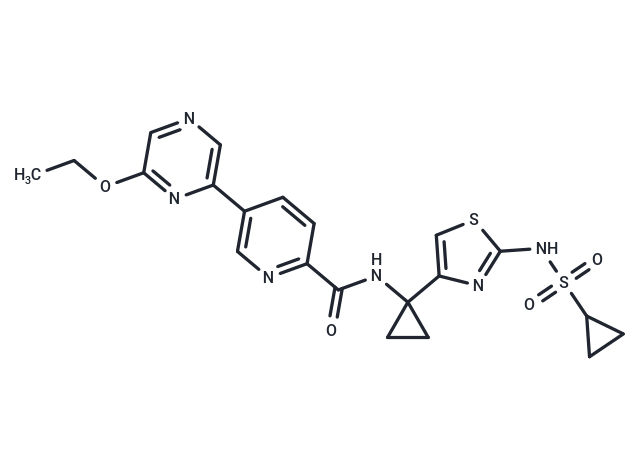
CTPS1-IN-1
CAS No. 2341943-12-0
CTPS1-IN-1( —— )
Catalog No. M37584 CAS No. 2341943-12-0
CTPS1-IN-1 is a cytidine-5′ triphosphate synthase 1 (CTPS1) inhibitor with potential antitumor activity and can be used to study autoimmune diseases.
Purity : >98% (HPLC)
 COA
Datasheet
HNMR
HPLC
MSDS
Handing Instructions
| Size | Price / USD | Stock | Quantity |
| 5MG | 416 | In Stock |


|
| 10MG | 655 | In Stock |
|
| 25MG | 1017 | In Stock |
|
| 50MG | 1330 | In Stock |
|
| 100MG | 1795 | In Stock |
|
| 200MG | 2446 | In Stock |
|
| 500MG | Get Quote | In Stock |
|
| 1G | Get Quote | In Stock |
|
Biological Information
-
Product NameCTPS1-IN-1
-
NoteResearch use only, not for human use.
-
Brief DescriptionCTPS1-IN-1 is a cytidine-5′ triphosphate synthase 1 (CTPS1) inhibitor with potential antitumor activity and can be used to study autoimmune diseases.
-
DescriptionCTPS1-IN-1 is a cytidine-5′ triphosphate synthase 1 (CTPS1) inhibitor with potential antitumor activity and can be used to study autoimmune diseases.
-
In Vitro——
-
In Vivo——
-
Synonyms——
-
PathwayOthers
-
TargetOther Targets
-
RecptorOthers
-
Research Area——
-
Indication——
Chemical Information
-
CAS Number2341943-12-0
-
Formula Weight486.57
-
Molecular FormulaC21H22N6O4S2
-
Purity>98% (HPLC)
-
Solubility——
-
SMILESO=C(NC1(C=2N=C(SC2)NS(=O)(=O)C3CC3)CC1)C4=NC=C(C=C4)C=5N=C(OCC)C=NC5
-
Chemical Name——
Shipping & Storage Information
-
Storage(-20℃)
-
ShippingWith Ice Pack
-
Stability≥ 2 years
Reference
molnova catalog



related products
-
RH01386
RH01386 is a small molecule that can prevent ER stress-induced β cell dysfunction and death, and inhibits proapoptotic gene expression,has the potential for type 2 diabetes treatment. RH01386 restores ER stress-impaired glucose-stimulated insulin secretion responses.
-
Azadiradione
Azadiradione (AZD) from the methanolic extract of seeds of Azadirachta indica.
-
Escin Iib
Escin IIb, isolated from horse chestnut, the seeds of Aesculus hippocastanum L., has positive effects on acute inflammation in animals.
