


 Cart
Cart
 sales@molnova.com


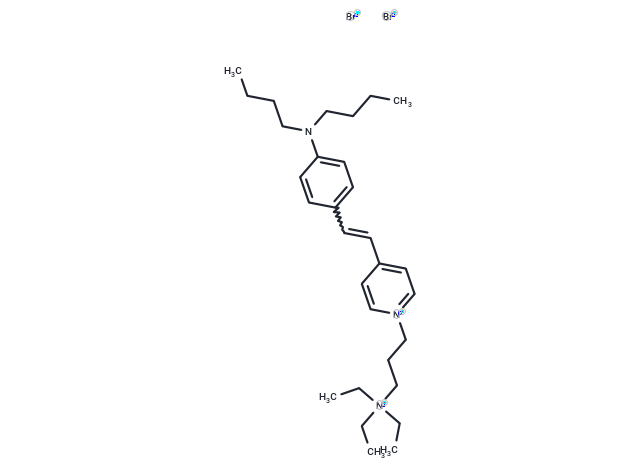
FM1-43
CAS No. 149838-22-2
FM1-43( —— )
Catalog No. M37567 CAS No. 149838-22-2
FM1-43 is a highly lipophilic, water-soluble styrene dye that acts as an osmotic blocker of hair cell mechanical transducer channels and can be used to study neuropeptide granule dynamics and cytotoxicity.
Purity : >98% (HPLC)
 COA
Datasheet
HNMR
HPLC
MSDS
Handing Instructions
COA
Datasheet
HNMR
HPLC
MSDS
Handing Instructions
| Size | Price / USD | Stock | Quantity |
| 5MG | 275 | In Stock |


|
| 10MG | 411 | In Stock |
|
| 25MG | 655 | In Stock |
|
| 50MG | 908 | In Stock |
|
| 100MG | Get Quote | In Stock |
|
| 200MG | Get Quote | In Stock |
|
| 500MG | Get Quote | In Stock |
|
| 1G | Get Quote | In Stock |
|
Biological Information
-
Product NameFM1-43
-
NoteResearch use only, not for human use.
-
Brief DescriptionFM1-43 is a highly lipophilic, water-soluble styrene dye that acts as an osmotic blocker of hair cell mechanical transducer channels and can be used to study neuropeptide granule dynamics and cytotoxicity.
-
DescriptionFM1-43 is a very lipophilic, water-soluble styrene dyes, can specifically bind to cell membranes and inner membrane organelles to produce fluorescence. FM1-43 is widely used in endocytic and exospic membrane structure markers.
-
In Vitro——
-
In Vivo——
-
Synonyms——
-
PathwayOthers
-
TargetOther Targets
-
RecptorOthers
-
Research Area——
-
Indication——
Chemical Information
-
CAS Number149838-22-2
-
Formula Weight611.54
-
Molecular FormulaC30H49Br2N3
-
Purity>98% (HPLC)
-
SolubilityIn Vitro:?DMSO : 50 mg/mL (81.76 mM; Ultrasonic (<60°C)
-
SMILES[Br-].[Br-].CCCCN(CCCC)c1ccc(C=Cc2cc[n+](CCC[N+](CC)(CC)CC)cc2)cc1
-
Chemical Name——
Shipping & Storage Information
-
Storage(-20℃)
-
ShippingWith Ice Pack
-
Stability≥ 2 years
Reference
1. J E Gale, et al. FM1-43 dye behaves as a permeant blocker of the hair-cell mechanotransducer channel. J Neurosci. 2001 Sep 15;21(18):7013-25.?
molnova catalog



related products
-
Cuneataside C
Cuneataside C.
-
Carboxyatractyloside
Carboxyatractyloside dipotassium is a toxic natural product, acts as an inhibitor of ADP/ATP carrier, inhibits mitochondrial ADP/ATP transport.
-
Thailanstatin A
Thailanstatin A is an ultra-potent inhibitor of eukaryotic RNA splicing ( IC 50 =650 nM).
