


 Cart
Cart
 sales@molnova.com


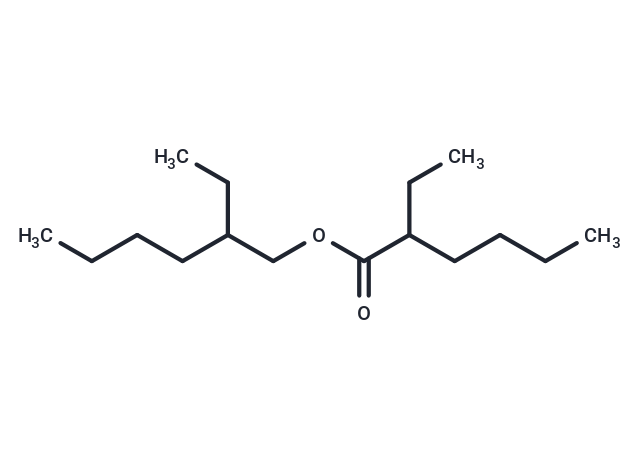
2-Ethylhexyl 2-ethylhexanoate
CAS No. 7425-14-1
2-Ethylhexyl 2-ethylhexanoate( —— )
Catalog No. M37470 CAS No. 7425-14-1
2-Ethylhexyl 2-ethylhexanoate is an industrially used organic solvent that can be used in paints, inks, detergents, and other fields.
Purity : >98% (HPLC)
 COA
Datasheet
HNMR
HPLC
MSDS
Handing Instructions
COA
Datasheet
HNMR
HPLC
MSDS
Handing Instructions
| Size | Price / USD | Stock | Quantity |
| 25MG | 29 | In Stock |


|
| 50MG | 37 | In Stock |
|
| 100MG | Get Quote | In Stock |
|
| 200MG | Get Quote | In Stock |
|
| 500MG | Get Quote | In Stock |
|
| 1G | Get Quote | In Stock |
|
Biological Information
-
Product Name2-Ethylhexyl 2-ethylhexanoate
-
NoteResearch use only, not for human use.
-
Brief Description2-Ethylhexyl 2-ethylhexanoate is an industrially used organic solvent that can be used in paints, inks, detergents, and other fields.
-
Description2-Ethylhexyl 2-ethylhexanoate is an industrially used organic solvent that can be used in paints, inks, detergents, and other fields.
-
In Vitro——
-
In Vivo——
-
Synonyms——
-
PathwayOthers
-
TargetOther Targets
-
RecptorOthers
-
Research Area——
-
Indication——
Chemical Information
-
CAS Number7425-14-1
-
Formula Weight256.42
-
Molecular FormulaC16H32O2
-
Purity>98% (HPLC)
-
Solubility——
-
SMILESO=C(OCC(CC)CCCC)C(CC)CCCC
-
Chemical Name——
Shipping & Storage Information
-
Storage(-20℃)
-
ShippingWith Ice Pack
-
Stability≥ 2 years
Reference
molnova catalog



related products
-
GPR183
GPR183 is a chemotactic receptor known for its role in the maturation of B cells, and the endogenous ligand is the oxysterol 7α,25-dihydroxycholesterol (7α,25-OHC). GPR183 can be used in research on inflammatory bowel disease (IBD).
-
BCMA72-80
BCMA72-80 is a HLA-A2-specific B-cell maturation antigen (BCMA) peptide, with a strong affinity to HLA-A2. It is used to used in the research of multiple myeloma or other B-cell maturation antigen expressing tumors.
-
Moexipril HCl
Moexipril HCl is a potent orally active nonsulfhydrylangiotensin converting enzyme (ACE)inhibitor, used for the treatment of hypertension and congestive heart failure.
