


 Cart
Cart
 sales@molnova.com


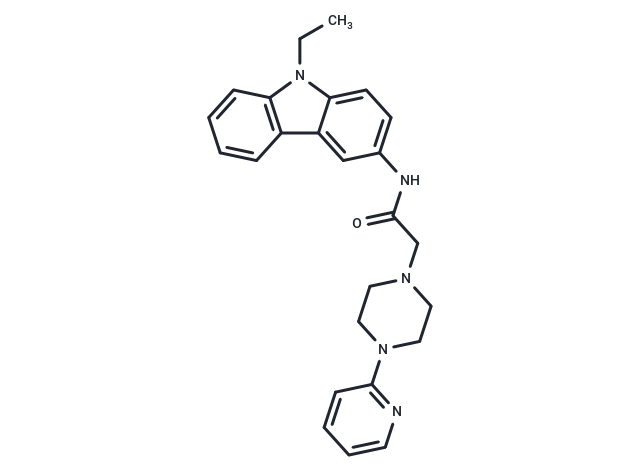
WAY-639889
CAS No. 432506-24-6
WAY-639889( —— )
Catalog No. M37119 CAS No. 432506-24-6
WAY-639889 is a small molecule compound with selective and potent inhibitory effects on neuropeptide Y-5 receptors.
Purity : >98% (HPLC)
 COA
Datasheet
HNMR
HPLC
MSDS
Handing Instructions
COA
Datasheet
HNMR
HPLC
MSDS
Handing Instructions
| Size | Price / USD | Stock | Quantity |
| 5MG | 75 | In Stock |


|
| 10MG | 119 | In Stock |
|
| 25MG | 238 | In Stock |
|
| 50MG | 346 | In Stock |
|
| 100MG | 493 | In Stock |
|
| 200MG | 643 | In Stock |
|
| 500MG | Get Quote | In Stock |
|
| 1G | Get Quote | In Stock |
|
Biological Information
-
Product NameWAY-639889
-
NoteResearch use only, not for human use.
-
Brief DescriptionWAY-639889 is a small molecule compound with selective and potent inhibitory effects on neuropeptide Y-5 receptors.
-
DescriptionWAY-639889 is a small molecule compound with selective and potent inhibitory effects on neuropeptide Y-5 receptors.
-
In Vitro——
-
In Vivo——
-
Synonyms——
-
PathwayGPCR/G Protein
-
TargetNeuropeptide Y Receptor
-
RecptorNeuropeptide Y Receptor
-
Research Area——
-
Indication——
Chemical Information
-
CAS Number432506-24-6
-
Formula Weight413.51
-
Molecular FormulaC25H27N5O
-
Purity>98% (HPLC)
-
Solubility——
-
SMILESO=C(NC1=CC=C2C(=C1)C=3C=CC=CC3N2CC)CN4CCN(C5=NC=CC=C5)CC4
-
Chemical Name——
Shipping & Storage Information
-
Storage(-20℃)
-
ShippingWith Ice Pack
-
Stability≥ 2 years
Reference
molnova catalog



related products
-
RFRP-1 (human)
Potent endogenous NPFF receptor agonist (EC50 values are 0.0011 and 29 nM for NPFF2 and NPFF1, respectively). Attenuates contractile function of isolated rat and rabbit cardiac myocytes. Reduces heart rate, stroke volume, ejection fraction and cardiac output, and increases plasma prolactin levels in rats. GnIH homolog.
-
CART (55-102) (human...
Cocaine- and amphetamine-regulated transcript (CART) with potent appetite-suppressing activity. Satiety factor; inhibits normal and starvation-induced feeding. Closely related to the actions of leptin and neuropeptide Y; blocks the neuropeptide Y-induced feeding response.
-
GALNON TFA(475115-35...
Galnon is a novel non-peptide galanin receptor agonist (GAL1 and GAL2 with Ki of 11.7 and 34.1 μM respectively).
