


 Cart
Cart
 sales@molnova.com


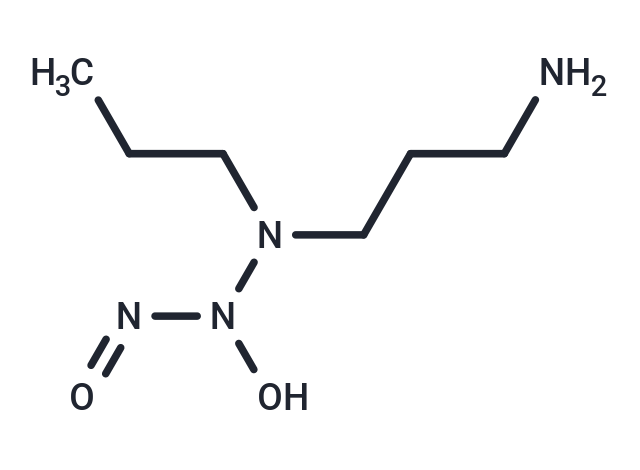
PAPA NONOate
CAS No. 146672-58-4
PAPA NONOate( —— )
Catalog No. M36582 CAS No. 146672-58-4
PAPA NONOate is a pH-regulated NO donor.PAPA NONOate has potential antitumor activity and can be used to study diabetic wound healing disorders.
Purity : >98% (HPLC)
 COA
Datasheet
HNMR
HPLC
MSDS
Handing Instructions
COA
Datasheet
HNMR
HPLC
MSDS
Handing Instructions
| Size | Price / USD | Stock | Quantity |
| 2MG | 47 | In Stock |


|
| 100MG | Get Quote | In Stock |
|
| 200MG | Get Quote | In Stock |
|
| 500MG | Get Quote | In Stock |
|
| 1G | Get Quote | In Stock |
|
Biological Information
-
Product NamePAPA NONOate
-
NoteResearch use only, not for human use.
-
Brief DescriptionPAPA NONOate is a pH-regulated NO donor.PAPA NONOate has potential antitumor activity and can be used to study diabetic wound healing disorders.
-
DescriptionPAPA NONOate is a NO donor with a NO release half-life of 77 min (22-25°C). PAPA NONOate may represent a potential research for impaired wound healing in diabetes by increasing the rate of collagen synthesis at the wound site.
-
In VitroPAPA NONOate (50 μM; 12 h) significantly reduces 70% caspase-3-like activity in caspase-3-overexpressing HUVEC and abolishs the induction of cell death by caspase-3.
-
In VivoPAPA NONOate (100 μM in phosphate buffer) increases the rate of wound healing in rats with diabetes and wound.Animal Model:Anesthetized male Sprague-Dawley rats with streptozotocin-induced diabetes and full thickness dermal wound Dosage:100 μM Administration:Wounds received 100 μM PAPA NONOate in phosphate buffer Result:Increased the wound healing rate in test group.
-
Synonyms——
-
PathwayProteasome/Ubiquitin
-
TargetEndogenous Metabolite
-
RecptorEndogenous Metabolite | NO Synthase
-
Research Area——
-
Indication——
Chemical Information
-
CAS Number146672-58-4
-
Formula Weight176.22
-
Molecular FormulaC6H16N4O2
-
Purity>98% (HPLC)
-
SolubilityIn Vitro:?H2O : 50 mg/mL (283.74 mM; Ultrasonic (<60°C)
-
SMILESO=NN(O)N(CCC)CCCN
-
Chemical Name——
Shipping & Storage Information
-
Storage(-20℃)
-
ShippingWith Ice Pack
-
Stability≥ 2 years
Reference
1. R?ssig L, et al. Nitric oxide inhibits caspase-3 by S-nitrosation in vivo. J Biol Chem. 1999 Mar 12;274(11):6823-6.?
molnova catalog



related products
-
Neopterin
D-(+)-Neopterin is produced by human monocytes/macrophages upon stimulation with the cytokine interferon-γ. In humans, neopterin is involved in purine biosynthesis.
-
Nα-Acetyl-L-lysine
N-Alpha-acetyllysine is a N-acetylated amino acid. It is a normal constituent of human urine with concentrations in normal samples too small to allow its routine detection; however it has been found at increased levels in the urine of a patient with aminoacylase I deficiency.
-
Enalapril Maleate
Enalapril Maleate, an angiotensin-converting enzyme (ACE) inhibitor, is utilized in the treatment of hypertension, chronic heart failure , and diabetic nephropathy.
