


 Cart
Cart
 sales@molnova.com


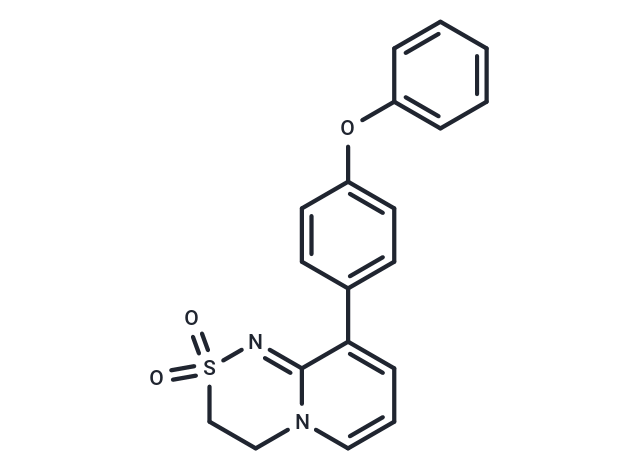
TAK-137
CAS No. 1358749-55-9
TAK-137( —— )
Catalog No. M36358 CAS No. 1358749-55-9
TAK-137 is an AMPA receptor enhancer with antidepressant effects. TAK-137 has the ability to improve cognition and could be used to study schizophrenia.
Purity : >98% (HPLC)
 COA
Datasheet
HNMR
HPLC
MSDS
Handing Instructions
COA
Datasheet
HNMR
HPLC
MSDS
Handing Instructions
| Size | Price / USD | Stock | Quantity |
| 5MG | 686 | In Stock |


|
| 10MG | 938 | In Stock |
|
| 25MG | 1444 | In Stock |
|
| 50MG | 1841 | In Stock |
|
| 100MG | Get Quote | In Stock |
|
| 200MG | Get Quote | In Stock |
|
| 500MG | Get Quote | In Stock |
|
| 1G | Get Quote | In Stock |
|
Biological Information
-
Product NameTAK-137
-
NoteResearch use only, not for human use.
-
Brief DescriptionTAK-137 is an AMPA receptor enhancer with antidepressant effects. TAK-137 has the ability to improve cognition and could be used to study schizophrenia.
-
DescriptionTAK-137 is an AMPA receptor enhancer with antidepressant effects. TAK-137 has the ability to improve cognition and could be used to study schizophrenia.
-
In Vitro——
-
In Vivo——
-
Synonyms——
-
PathwayMembrane Transporter/Ion Channel
-
TargetiGluR
-
RecptoriGluR
-
Research Area——
-
Indication——
Chemical Information
-
CAS Number1358749-55-9
-
Formula Weight352.41
-
Molecular FormulaC19H16N2O3S
-
Purity>98% (HPLC)
-
Solubility——
-
SMILESO=S1(=O)N=C2C(=CC=CN2CC1)C=3C=CC(OC=4C=CC=CC4)=CC3
-
Chemical Name——
Shipping & Storage Information
-
Storage(-20℃)
-
ShippingWith Ice Pack
-
Stability≥ 2 years
Reference
molnova catalog



related products
-
S44819
S44819 (S-44819, Egis-1352 Afizagabar) is a novel potent, competitive, selective antagonist of the α5-GABAAR with Kd of 221 nM, IC50 of 585 nM (α5β2γ2).
-
L-701324
A potent, orally active antagonist at the glycine modulatory site on NMDA receptor with IC50 of 2 nM.
-
Mibampator
Mibampator is an effective and selective AMPA receptor potentiator.
