


 Cart
Cart
 sales@molnova.com


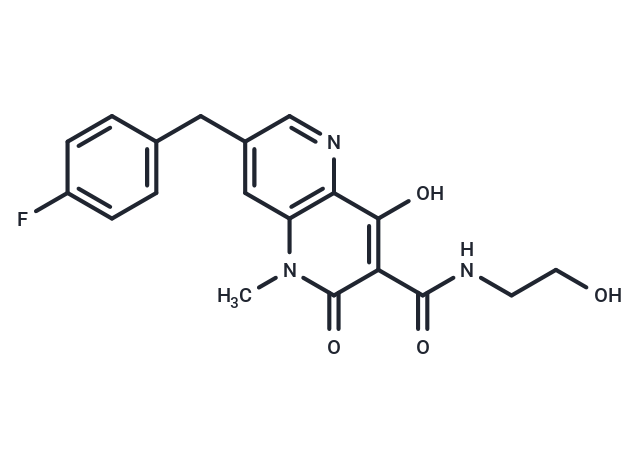
GSK-364735
CAS No. 863434-13-3
GSK-364735( —— )
Catalog No. M36260 CAS No. 863434-13-3
GSK-364735 is a human immunodeficiency virus type 1 integrase (HIV-1 IN) inhibitor with antiviral activity and is used in the study of retroviral infections.
Purity : >98% (HPLC)
 COA
Datasheet
HNMR
HPLC
MSDS
Handing Instructions
COA
Datasheet
HNMR
HPLC
MSDS
Handing Instructions
| Size | Price / USD | Stock | Quantity |
| 5MG | 686 | In Stock |


|
| 10MG | 938 | In Stock |
|
| 25MG | 1444 | In Stock |
|
| 100MG | Get Quote | In Stock |
|
| 200MG | Get Quote | In Stock |
|
| 500MG | Get Quote | In Stock |
|
| 1G | Get Quote | In Stock |
|
Biological Information
-
Product NameGSK-364735
-
NoteResearch use only, not for human use.
-
Brief DescriptionGSK-364735 is a human immunodeficiency virus type 1 integrase (HIV-1 IN) inhibitor with antiviral activity and is used in the study of retroviral infections.
-
DescriptionGSK-364735 is a human immunodeficiency virus type 1 integrase (HIV-1 IN) inhibitor with antiviral activity and is used in the study of retroviral infections.
-
In Vitro——
-
In Vivo——
-
Synonyms——
-
PathwayMicrobiology/Virology
-
TargetHIV
-
RecptorHIV Protease
-
Research Area——
-
Indication——
Chemical Information
-
CAS Number863434-13-3
-
Formula Weight371.36
-
Molecular FormulaC19H18FN3O4
-
Purity>98% (HPLC)
-
Solubility——
-
SMILESO=C(NCCO)C=1C(=O)N(C=2C=C(C=NC2C1O)CC3=CC=C(F)C=C3)C
-
Chemical Name——
Shipping & Storage Information
-
Storage(-20℃)
-
ShippingWith Ice Pack
-
Stability≥ 2 years
Reference
molnova catalog



related products
-
Helichrysetin
Helichrysetin has mild anti-HIV-1 PR activity. Helichrysetin has great potentials for development as an anticancer agent, it has cytotoxic effect on four selected cancer cell lines, A549, MCF-7, Ca Ski, and HT-29.Searching for anti-HIV-1 protease (PR) inhibitors of Thai medicinal plants led to the isolation of a new cyclohexenyl chalcone named panduratin C and chalcone derivatives (2-6) from the methanol extract of Boesenbergia pandurata rhizomes.
-
Navuridine
Navuridine is an oral active inhibitor of HIV reverse transcriptase with a relatively short half-life.
-
Feruloyltyramine
NTF is likely to inhibit COX enzymes, thereby suppressing P-selectin expression on platelets, is a platelet aggregation inhibitor.
