


 Cart
Cart
 sales@molnova.com


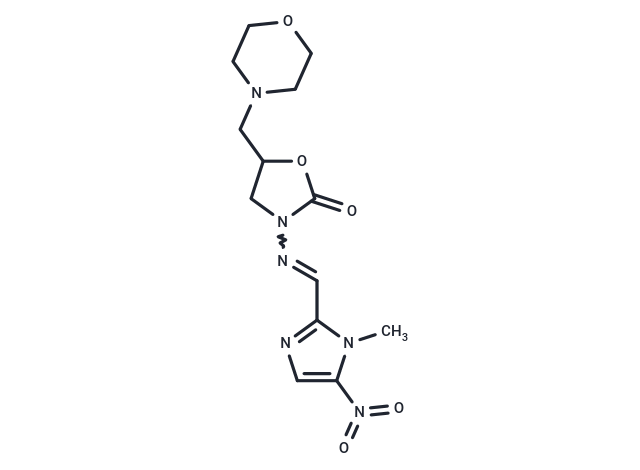
Moxnidazole
CAS No. 52279-59-1
Moxnidazole( —— )
Catalog No. M36201 CAS No. 52279-59-1
Moxnidazole, a 5-nitroimidazole, is mutagenic in microbial assays and in Drosophila, inducing genetic alterations in mouse somatic cells.
Purity : >98% (HPLC)
 COA
Datasheet
HNMR
HPLC
MSDS
Handing Instructions
COA
Datasheet
HNMR
HPLC
MSDS
Handing Instructions
| Size | Price / USD | Stock | Quantity |
| 5MG | 187 | In Stock |


|
| 10MG | 275 | In Stock |
|
| 25MG | 430 | In Stock |
|
| 50MG | 600 | In Stock |
|
| 100MG | 820 | In Stock |
|
| 200MG | 1097 | In Stock |
|
| 500MG | Get Quote | In Stock |
|
| 1G | Get Quote | In Stock |
|
Biological Information
-
Product NameMoxnidazole
-
NoteResearch use only, not for human use.
-
Brief DescriptionMoxnidazole, a 5-nitroimidazole, is mutagenic in microbial assays and in Drosophila, inducing genetic alterations in mouse somatic cells.
-
DescriptionMoxnidazole, a 5-nitroimidazole, is mutagenic in microbial assays and in Drosophila, inducing genetic alterations in mouse somatic cells.
-
In Vitro——
-
In Vivo——
-
Synonyms——
-
PathwayOthers
-
TargetOther Targets
-
RecptorOthers
-
Research Area——
-
Indication——
Chemical Information
-
CAS Number52279-59-1
-
Formula Weight338.32
-
Molecular FormulaC13H18N6O5
-
Purity>98% (HPLC)
-
Solubility——
-
SMILESN(=CC=1N(C)C(N(=O)=O)=CN1)N2CC(CN3CCOCC3)OC2=O
-
Chemical Name——
Shipping & Storage Information
-
Storage(-20℃)
-
ShippingWith Ice Pack
-
Stability≥ 2 years
Reference
molnova catalog



related products
-
bryonamide A
Bryonamide A is a natural compound isolated from red algae Bostrychia radicans (Rhodomelaceae).
-
Glutaminase-IN-1
Glutaminase-IN-1 (CB839 derivative), a novel 1,3,4-selenodiazepine inhibitor of the renal-type glutaminase (KGA) variant, exhibited antitumor activity in an aggressive H22 hepatocellular carcinoma xenograft model.
-
Elephantopinolide D
Elephantopinolide D
