


 Cart
Cart
 sales@molnova.com


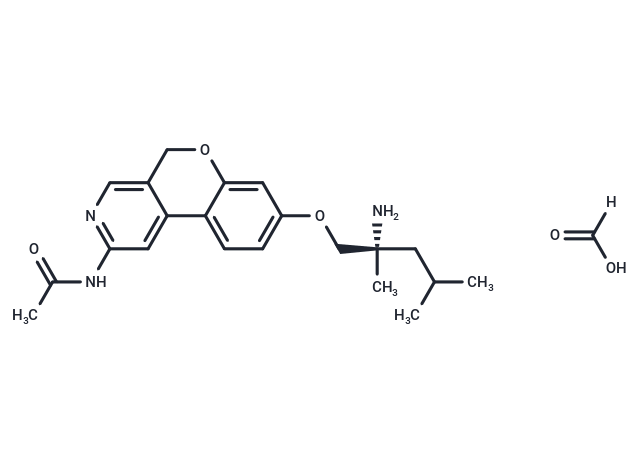
Etilefrine pivalate HCl
CAS No. 42145-91-5
Etilefrine pivalate HCl( —— )
Catalog No. M36167 CAS No. 42145-91-5
Etilefrine pivalate HCl is an orally active compound for the treatment of migraine headaches.
Purity : >98% (HPLC)
 COA
Datasheet
HNMR
HPLC
MSDS
Handing Instructions
COA
Datasheet
HNMR
HPLC
MSDS
Handing Instructions
| Size | Price / USD | Stock | Quantity |
| 5MG | 172 | In Stock |


|
| 10MG | 254 | In Stock |
|
| 25MG | 392 | In Stock |
|
| 50MG | 551 | In Stock |
|
| 100MG | 762 | In Stock |
|
| 200MG | 1014 | In Stock |
|
| 500MG | Get Quote | In Stock |
|
| 1G | Get Quote | In Stock |
|
Biological Information
-
Product NameEtilefrine pivalate HCl
-
NoteResearch use only, not for human use.
-
Brief DescriptionEtilefrine pivalate HCl is an orally active compound for the treatment of migraine headaches.
-
DescriptionEtilefrine pivalate HCl is an orally active compound for the treatment of migraine headaches.
-
In Vitro——
-
In Vivo——
-
Synonyms——
-
PathwayOthers
-
TargetOther Targets
-
RecptorOthers
-
Research Area——
-
Indication——
Chemical Information
-
CAS Number42145-91-5
-
Formula Weight415.48
-
Molecular FormulaC22H29N3O5
-
Purity>98% (HPLC)
-
Solubility——
-
SMILESCC(NC1=NC=C2COC3=CC(OC[C@@](C)(N)CC(C)C)=CC=C3C2=C1)=O.[H]C(O)=O
-
Chemical Name——
Shipping & Storage Information
-
Storage(-20℃)
-
ShippingWith Ice Pack
-
Stability≥ 2 years
Reference
molnova catalog



related products
-
[Leu116]-Prepro-Neur...
[Leu116]-Prepro-Neuromedin U (104-136) (human)
-
DOTMA
DOTMA (N-(1-(2,3-dioleyloxy)propyl)-N,N,N-trimethylammonium) is a tetra-methylated DOTA analogue. DOTMA is a cationic lipid and can be used as a non-viral vector for gene therapy.
-
Arillanin A
Arillanin A is an oligosaccharide ester isolated from Polygala arillata.
