


 Cart
Cart
 sales@molnova.com


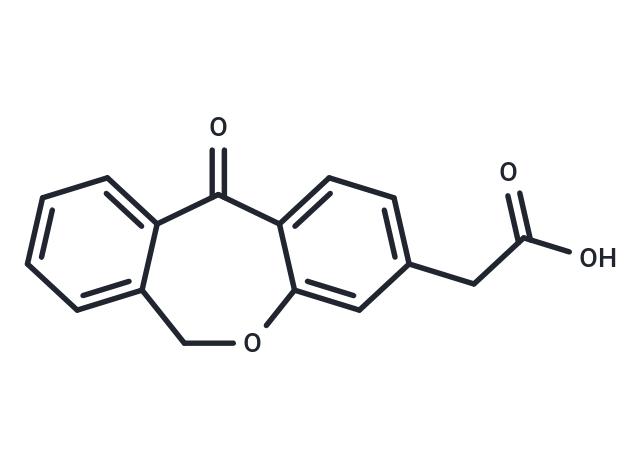
Oxepinac
CAS No. 55689-65-1
Oxepinac( —— )
Catalog No. M35997 CAS No. 55689-65-1
oxepinac is an effective and well-tolerated compound for the treatment of painful osteoarthritis. oxepinac has no teratogenic effect on mouse and rabbit fetuses in animal experiments.
Purity : >98% (HPLC)
 COA
Datasheet
HNMR
HPLC
MSDS
Handing Instructions
COA
Datasheet
HNMR
HPLC
MSDS
Handing Instructions
| Size | Price / USD | Stock | Quantity |
| 5MG | 235 | In Stock |


|
| 10MG | 335 | In Stock |
|
| 25MG | 511 | In Stock |
|
| 50MG | 671 | In Stock |
|
| 100MG | 905 | In Stock |
|
| 200MG | 1218 | In Stock |
|
| 500MG | Get Quote | In Stock |
|
| 1G | Get Quote | In Stock |
|
Biological Information
-
Product NameOxepinac
-
NoteResearch use only, not for human use.
-
Brief Descriptionoxepinac is an effective and well-tolerated compound for the treatment of painful osteoarthritis. oxepinac has no teratogenic effect on mouse and rabbit fetuses in animal experiments.
-
Descriptionoxepinac is an effective and well-tolerated compound for the treatment of painful osteoarthritis. oxepinac has no teratogenic effect on mouse and rabbit fetuses in animal experiments.
-
In Vitro——
-
In Vivo——
-
Synonyms——
-
PathwayOthers
-
TargetOther Targets
-
RecptorOthers
-
Research Area——
-
Indication——
Chemical Information
-
CAS Number55689-65-1
-
Formula Weight268.26
-
Molecular FormulaC16H12O4
-
Purity>98% (HPLC)
-
Solubility——
-
SMILESO=C1C=2C(=CC(CC(O)=O)=CC2)OCC=3C1=CC=CC3
-
Chemical Name——
Shipping & Storage Information
-
Storage(-20℃)
-
ShippingWith Ice Pack
-
Stability≥ 2 years
Reference
molnova catalog



related products
-
Isokurarinone
Isokurarinone is a natural product from Sophora flavescens Ait.
-
Toddanone
Standard reference.
-
5-methoxydeydrodiiso...
Maceneolignan A is a natural product that can be isolated from mace, the aril of Myristica fragrans (Myristicaceae). Maceneolignan A inhibits the release of β-hexosaminidase in RBL-2H3 cells, with an IC50 of 48.4 μM. Maceneolignan A inhibits the release of TNF-α in antigen stimulated RBL-2H3 cells, with an IC50 of 63.7 μM.
