


 Cart
Cart
 sales@molnova.com


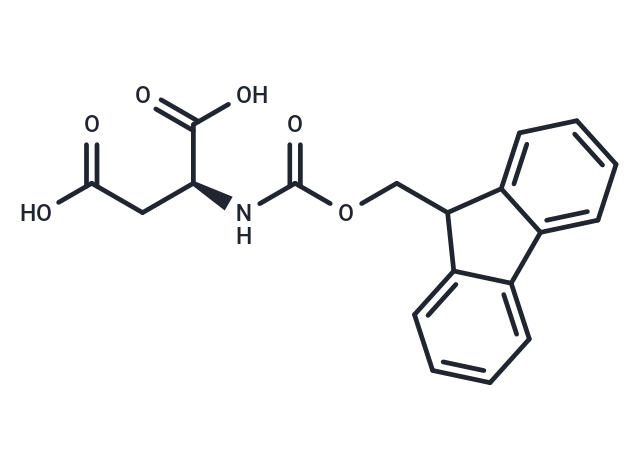
Fmoc-L-aspartic acid
CAS No. 119062-05-4
Fmoc-L-aspartic acid( —— )
Catalog No. M35782 CAS No. 119062-05-4
Fmoc-L-aspartic acid (Fmoc-Asp-OH) is an aspartic acid derivative.
Purity : >98% (HPLC)
 COA
Datasheet
HNMR
HPLC
MSDS
Handing Instructions
COA
Datasheet
HNMR
HPLC
MSDS
Handing Instructions
| Size | Price / USD | Stock | Quantity |
| 1G | 26 | In Stock |


|
Biological Information
-
Product NameFmoc-L-aspartic acid
-
NoteResearch use only, not for human use.
-
Brief DescriptionFmoc-L-aspartic acid (Fmoc-Asp-OH) is an aspartic acid derivative.
-
Description(((9H-Fluoren-9-yl)methoxy)carbonyl)-L-aspartic acid is an aspartic acid derivative.
-
In VitroAmino acids and amino acid derivatives have been commercially used as ergogenic supplements. They influence the secretion of anabolic hormones, supply of fuel during exercise, mental performance during stress related tasks and prevent exercise induced muscle damage. They are recognized to be beneficial as ergogenic dietary substances.
-
In Vivo——
-
Synonyms——
-
PathwayImmunology/Inflammation
-
TargetAmino Acids and Derivatives
-
RecptorAmino Acids and Derivatives
-
Research Area——
-
Indication——
Chemical Information
-
CAS Number119062-05-4
-
Formula Weight355.34
-
Molecular FormulaC19H17NO6
-
Purity>98% (HPLC)
-
SolubilityIn Vitro:?DMSO : 100 mg/mL (281.42 mM; Ultrasonic )
-
SMILESOC(=O)C[C@H](NC(=O)OCC1c2ccccc2-c2ccccc12)C(O)=O
-
Chemical Name——
Shipping & Storage Information
-
Storage(-20℃)
-
ShippingWith Ice Pack
-
Stability≥ 2 years
Reference
1. Luckose F, et al. Effects of amino acid derivatives on physical, mental, and physiological activities. Crit Rev Food Sci Nutr. 2015;55(13):1793-1144.?
molnova catalog



related products
-
Fmoc-Lys-OH
Fmoc-Lys-OH (Nα-Fmoc-L-lysine) is a lysine derivative commonly utilized in the synthesis of active compounds.
-
Acexamic Acid
6-Acetamidohexanoic acid is a kind of amino acids deriviate.
-
beta-Alanine
An amino acid formed in vivo by the degradation of dihydrouracil and carnosine.
