


 Cart
Cart
 sales@molnova.com


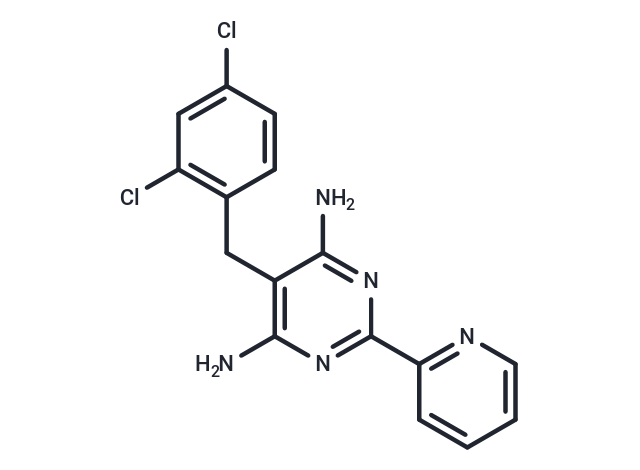
Hepcidin antagonist-1
CAS No. 338965-09-6
Hepcidin antagonist-1( —— )
Catalog No. M35515 CAS No. 338965-09-6
Hepcidin antagonist-1 is an iron-modulating antagonist.Hepcidin antagonist-1 can be used to study metabolic disorders such as iron-deficiency diseases and anemia.
Purity : >98% (HPLC)
 COA
Datasheet
HNMR
HPLC
MSDS
Handing Instructions
COA
Datasheet
HNMR
HPLC
MSDS
Handing Instructions
| Size | Price / USD | Stock | Quantity |
| 1 mL x 10 mM in DMSO | 535 | In Stock |


|
| 5MG | 487 | In Stock |
|
| 10MG | 730 | In Stock |
|
| 25MG | 1311 | In Stock |
|
| 50MG | 1795 | In Stock |
|
| 100MG | 2437 | In Stock |
|
| 200MG | Get Quote | In Stock |
|
| 500MG | Get Quote | In Stock |
|
| 1G | Get Quote | In Stock |
|
Biological Information
-
Product NameHepcidin antagonist-1
-
NoteResearch use only, not for human use.
-
Brief DescriptionHepcidin antagonist-1 is an iron-modulating antagonist.Hepcidin antagonist-1 can be used to study metabolic disorders such as iron-deficiency diseases and anemia.
-
DescriptionHepcidin antagonist-1 (example 104) is a potent hepcidin (hepcidine) antagonist with an IC50<50 μM. Hepcidin antagonist-1 can be used for researching iron metabolism disorders, such as anemias.
-
In Vitro——
-
In Vivo——
-
Synonyms——
-
PathwayOthers
-
TargetOther Targets
-
RecptorOthers
-
Research Area——
-
Indication——
Chemical Information
-
CAS Number338965-09-6
-
Formula Weight346.21
-
Molecular FormulaC16H13Cl2N5
-
Purity>98% (HPLC)
-
Solubility——
-
SMILESNC1=NC(=NC(N)=C1CC1=C(Cl)C=C(Cl)C=C1)C1=NC=CC=C1
-
Chemical Name——
Shipping & Storage Information
-
Storage(-20℃)
-
ShippingWith Ice Pack
-
Stability≥ 2 years
Reference
1. Franz DüRRENBERGER, et al. Novel pyrimidine and triazine hepcidine antagonists. WO2011026835
molnova catalog



related products
-
G-R-G-E-S-P (Inactiv...
G-R-G-E-S-P (Inactive control)
-
Atractylodinol
Atractylodinol, an antimicrobial, is a PRRSV (porcine reproductive and respiratory syndrome virus) inhibitor. Atractylodinol inhibits TGF-β receptor I recycling by binding to vimentin (KD of 454 nM) and inducing the formation of filamentous aggregates.
-
(Z)-3-Hexenyl tiglat...
(Z)-3-Hexenyl tiglate ((3Z)-Hex-3-en-1-yl (2E)-2-methylbut-2-enoate) is a RIFM fragrance that can be used in paints, coatings, inks, resins and other fields.
