


 Cart
Cart
 sales@molnova.com


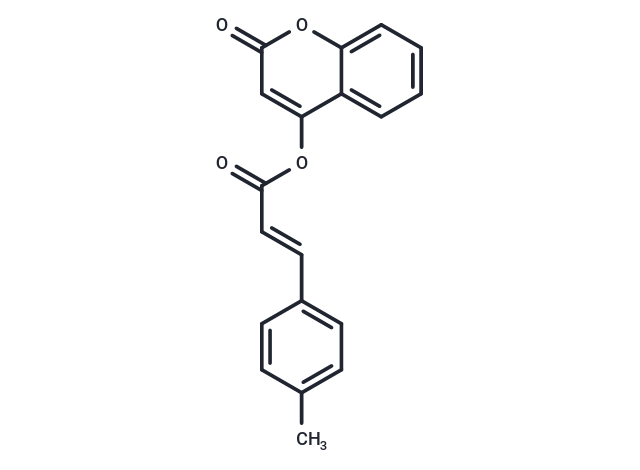
α-Glucosidase-IN-4
CAS No. 2410538-67-7
α-Glucosidase-IN-4( —— )
Catalog No. M35462 CAS No. 2410538-67-7
α-Glucosidase-IN-4 is a potent α-glucosidase inhibitor exhibiting antihypertensive and hypoglycemic activity.
Purity : >98% (HPLC)
 COA
Datasheet
HNMR
HPLC
MSDS
Handing Instructions
COA
Datasheet
HNMR
HPLC
MSDS
Handing Instructions
| Size | Price / USD | Stock | Quantity |
| 5MG | 645 | In Stock |


|
| 10MG | 798 | In Stock |
|
| 25MG | 1055 | In Stock |
|
| 50MG | 1283 | In Stock |
|
| 100MG | 1628 | In Stock |
|
| 200MG | 2195 | In Stock |
|
| 500MG | Get Quote | In Stock |
|
| 1G | Get Quote | In Stock |
|
Biological Information
-
Product Nameα-Glucosidase-IN-4
-
NoteResearch use only, not for human use.
-
Brief Descriptionα-Glucosidase-IN-4 is a potent α-glucosidase inhibitor exhibiting antihypertensive and hypoglycemic activity.
-
Descriptionα-Glucosidase-IN-4 is a reversible and mixed type α-glucosidase inhibitor with an IC50 of 12.98 μM, a KI of 27.02 μM, and a KIS of 13.65 μM, respectively.
-
In Vitro——
-
In Vivo——
-
Synonyms——
-
PathwayOthers
-
TargetOther Targets
-
RecptorGlucosidase
-
Research Area——
-
Indication——
Chemical Information
-
CAS Number2410538-67-7
-
Formula Weight306.31
-
Molecular FormulaC19H14O4
-
Purity>98% (HPLC)
-
Solubility——
-
SMILESO(C(/C=C/C1=CC=C(C)C=C1)=O)C=2C=3C(OC(=O)C2)=CC=CC3
-
Chemical Name——
Shipping & Storage Information
-
Storage(-20℃)
-
ShippingWith Ice Pack
-
Stability≥ 2 years
Reference
1. Xu XT, et al. Synthesis and biological evaluation of coumarin derivatives as α-glucosidase inhibitors. Eur J Med Chem. 2020;189:112013.?
molnova catalog



related products
-
4-Hydroxybenzamide
4-Hydroxybenzamide is a natural product from Berberis pruinosa.
-
Protein Kinase C Sub...
Protein kinase C substrate is a substrate of Protein kinase C, can be used to detect protein. Protein kinase C is a key regulatory element in signal transduction and exerts its effects by catalysing specific substrate phosphorylation.
-
HIV-1 gag Protein p2...
HIV-1 gag Protein p24 (194-210)
