


 Cart
Cart
 sales@molnova.com


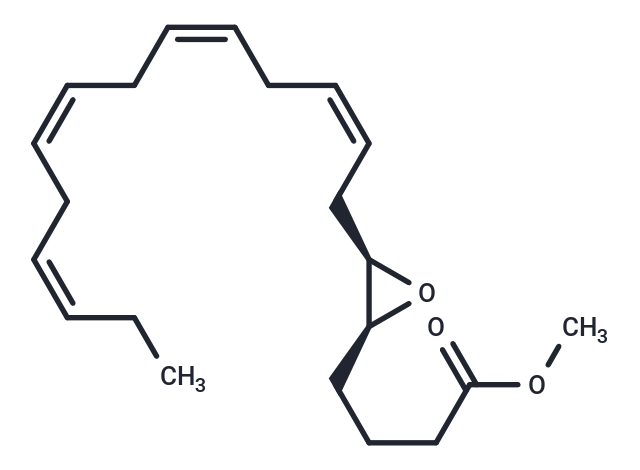
(±)5(6)-EpETE methyl ester
CAS No. 127716-49-8
(±)5(6)-EpETE methyl ester( —— )
Catalog No. M34927 CAS No. 127716-49-8
(±)5(6)-EpETE methyl ester is a derivative of 5(6)-EpETE which is stable enough to ship and handle routinely.(±) 5(6)-EpETE methyl ester is a chemically less reactive derivative of 5(6)-EpETE.
Purity : >98% (HPLC)
 COA
Datasheet
HNMR
HPLC
MSDS
Handing Instructions
COA
Datasheet
HNMR
HPLC
MSDS
Handing Instructions
| Size | Price / USD | Stock | Quantity |
| 100MG | Get Quote | Get Quote |


|
| 200MG | Get Quote | Get Quote |
|
| 500MG | Get Quote | Get Quote |
|
| 1G | Get Quote | Get Quote |
|
Biological Information
-
Product Name(±)5(6)-EpETE methyl ester
-
NoteResearch use only, not for human use.
-
Brief Description(±)5(6)-EpETE methyl ester is a derivative of 5(6)-EpETE which is stable enough to ship and handle routinely.(±) 5(6)-EpETE methyl ester is a chemically less reactive derivative of 5(6)-EpETE.
-
Description(±)5(6)-EpETE methyl ester is a derivative of 5(6)-EpETE which is stable enough to ship and handle routinely.(±) 5(6)-EpETE methyl ester is a chemically less reactive derivative of 5(6)-EpETE. The active free acid can be generated from the methyl ester by careful base hydrolysis. Epoxy eicosatetraenoic acids (EpETEs) are the epoxygenase metabolites of EPA. A number of vicinal diol metabolites of EpETEs have been detected in the plasma of patients on marine oil dietary supplementation, while in subjects on a typical western diet these compounds are generally not detected. The specific biologic activity of 5(6)-EpETE and its methyl ester have not been documented.
-
In Vitro——
-
In Vivo——
-
Synonyms——
-
PathwayOthers
-
TargetOther Targets
-
RecptorOthers
-
Research Area——
-
Indication——
Chemical Information
-
CAS Number127716-49-8
-
Formula Weight332.484
-
Molecular FormulaC21H32O3
-
Purity>98% (HPLC)
-
Solubility——
-
SMILESCC\C=C/C\C=C/C\C=C/C\C=C/C[C@H]1O[C@H]1CCCC(=O)OC
-
Chemical Name——
Shipping & Storage Information
-
Storage(-20℃)
-
ShippingWith Ice Pack
-
Stability≥ 2 years
Reference
molnova catalog



related products
-
Dimethylaminomicheli...
Dimethylaminomicheliolide HCl has potential anti-inflammatory and anti-tumor activity and inhibits the proliferation of glioblastoma cells by targeting pyruvate kinase 2 (PKM2) and reconnecting aerobic cell populations.
-
HIV-gp120-Fragment (...
HIV-gp120-Fragment (318-327)
-
Turtle Polypeptide I...
Turtle Polypeptide II
