


 Cart
Cart
 sales@molnova.com


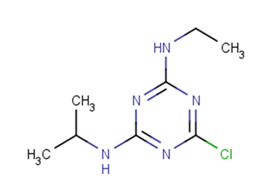
Atrazine
CAS No. 1912-24-9
Atrazine( Chromozin | Oleogesaprim | Aktikon | Gesaprim )
Catalog No. M20329 CAS No. 1912-24-9
Atrazine is an herbicide that does not occur naturallyand is a selective triazine herbicide. Atrazine is also a potent endocrine disruptor.
Purity : >98% (HPLC)
 COA
Datasheet
HNMR
HPLC
MSDS
Handing Instructions
COA
Datasheet
HNMR
HPLC
MSDS
Handing Instructions
| Size | Price / USD | Stock | Quantity |
| 100MG | Get Quote | In Stock |


|
| 200MG | Get Quote | In Stock |
|
| 500MG | Get Quote | In Stock |
|
| 1G | 33 | In Stock |
|
Biological Information
-
Product NameAtrazine
-
NoteResearch use only, not for human use.
-
Brief DescriptionAtrazine is an herbicide that does not occur naturallyand is a selective triazine herbicide. Atrazine is also a potent endocrine disruptor.
-
DescriptionAtrazine is an herbicide that does not occur naturallyand is a selective triazine herbicide. Atrazine is also a potent endocrine disruptor.
-
In Vitro——
-
In Vivo——
-
SynonymsChromozin | Oleogesaprim | Aktikon | Gesaprim
-
PathwayOthers
-
TargetOther Targets
-
RecptorOthers
-
Research Area——
-
Indication——
Chemical Information
-
CAS Number1912-24-9
-
Formula Weight215.68
-
Molecular FormulaC8H14ClN5
-
Purity>98% (HPLC)
-
SolubilityDMSO:43 mg/mL (199.36 mM)
-
SMILESCCNc1nc(Cl)nc(NC(C)C)n1
-
Chemical Name135-Triazine-24-diamine 6-chloro-N-ethyl-N'-(1-methylethyl)- (9CI)
Shipping & Storage Information
-
Storage(-20℃)
-
ShippingWith Ice Pack
-
Stability≥ 2 years
Reference
molnova catalog



related products
-
20-Hydroxyganoderic ...
20-Hydroxyganoderic acid AM1
-
Dalvastatin
Dalvastatin (RG-12561) is an orally available inhibitor of HMG-CoA reductase and cholesterol-lowering synthesis.Dalvastatin competitively inhibits rat hepatic HMG-CoA reductase with an IC50 value of 3.4 nmol / l.
-
S0859
S0859, an N-cyanosulphonamide compound, reversibly inhibit NBC-mediated pH(i) recovery.
