


 Cart
Cart
 sales@molnova.com


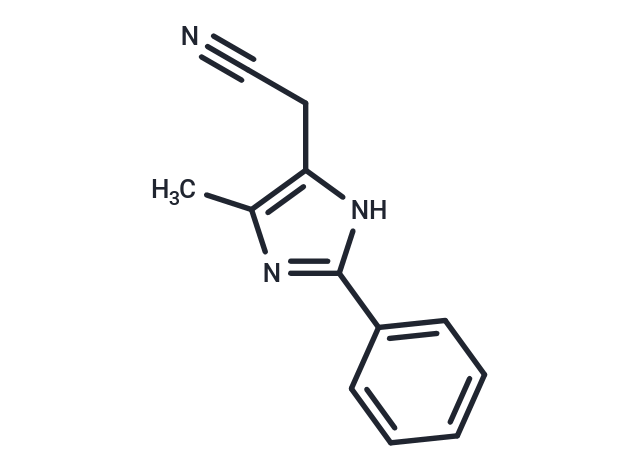
Mefenidil
CAS No. 58261-91-9
Mefenidil( —— )
Catalog No. M34648 CAS No. 58261-91-9
Mefenidil (McN-2378), a selective cerebral vasodilator, was shown to increase CBF in healthy brains without stimulating O2 uptake in a dog anesthesia model.
Purity : >98% (HPLC)
 COA
Datasheet
HNMR
HPLC
MSDS
Handing Instructions
COA
Datasheet
HNMR
HPLC
MSDS
Handing Instructions
| Size | Price / USD | Stock | Quantity |
| 5MG | 331 | In Stock |


|
| 10MG | 451 | In Stock |
|
| 25MG | 634 | In Stock |
|
| 50MG | 825 | In Stock |
|
| 100MG | 1135 | In Stock |
|
| 200MG | 1516 | In Stock |
|
| 500MG | Get Quote | In Stock |
|
| 1G | Get Quote | In Stock |
|
Biological Information
-
Product NameMefenidil
-
NoteResearch use only, not for human use.
-
Brief DescriptionMefenidil (McN-2378), a selective cerebral vasodilator, was shown to increase CBF in healthy brains without stimulating O2 uptake in a dog anesthesia model.
-
DescriptionMefenidil (McN-2378), a selective cerebral vasodilator, was shown to increase CBF in healthy brains without stimulating O2 uptake in a dog anesthesia model.
-
In Vitro——
-
In Vivo——
-
Synonyms——
-
PathwayCell Cycle/DNA Damage
-
TargetDNA/RNA Synthesis
-
RecptorDNA/RNA Synthesis
-
Research Area——
-
Indication——
Chemical Information
-
CAS Number58261-91-9
-
Formula Weight197.24
-
Molecular FormulaC12H11N3
-
Purity>98% (HPLC)
-
Solubility——
-
SMILESC(C#N)C=1NC(=NC1C)C2=CC=CC=C2
-
Chemical Name——
Shipping & Storage Information
-
Storage(-20℃)
-
ShippingWith Ice Pack
-
Stability≥ 2 years
Reference
molnova catalog



related products
-
CX-3543
CX-3543 (Quarfloxin, Itarnafloxin) is a small molecule nucleolus-targeting agent that selectively disrupts nucleolin/rDNA G-quadruplex complexes in the nucleolus.
-
ZM 39923 hydrochlori...
ZM 39923 hydrochloride is a JAK1/3 inhibitor with pIC50 of 4.4/7.1, almost no activity to JAK2 and modestly potent to EGFR; also found to be sensitive to transglutaminase.
-
SB-756050
SB756050 is a specific TGR5 agonist.
