


 Cart
Cart
 sales@molnova.com


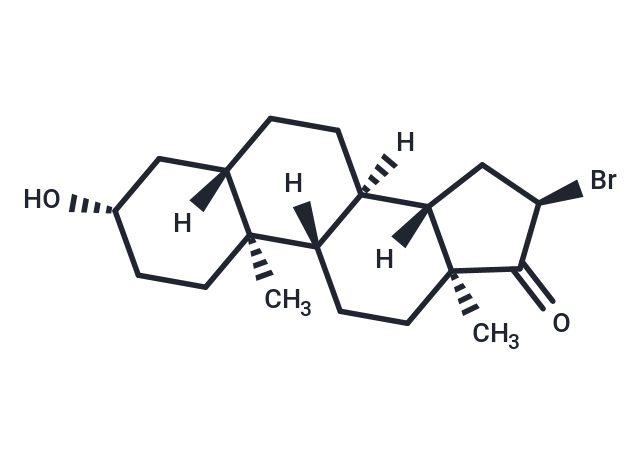
16α-Bromoepiandrosterone
CAS No. 28507-02-0
16α-Bromoepiandrosterone( —— )
Catalog No. M34618 CAS No. 28507-02-0
16α-Bromoepiandrosterone (BEA) is a water-soluble synthetic sterol related to DHEA and is used in studies of type II diabetes and non-diabetic tuberculosis infections.
Purity : >98% (HPLC)
 COA
Datasheet
HNMR
HPLC
MSDS
Handing Instructions
COA
Datasheet
HNMR
HPLC
MSDS
Handing Instructions
| Size | Price / USD | Stock | Quantity |
| 5MG | 285 | In Stock |


|
| 10MG | 428 | In Stock |
|
| 25MG | 732 | In Stock |
|
| 100MG | Get Quote | In Stock |
|
| 200MG | Get Quote | In Stock |
|
| 500MG | Get Quote | In Stock |
|
| 1G | Get Quote | In Stock |
|
Biological Information
-
Product Name16α-Bromoepiandrosterone
-
NoteResearch use only, not for human use.
-
Brief Description16α-Bromoepiandrosterone (BEA) is a water-soluble synthetic sterol related to DHEA and is used in studies of type II diabetes and non-diabetic tuberculosis infections.
-
Description16α-Bromoepiandrosterone (BEA) is a water-soluble synthetic sterol related to DHEA and is used in studies of type II diabetes and non-diabetic tuberculosis infections.
-
In Vitro——
-
In Vivo——
-
Synonyms——
-
PathwayOthers
-
TargetOther Targets
-
RecptorOthers
-
Research Area——
-
Indication——
Chemical Information
-
CAS Number28507-02-0
-
Formula Weight369.34
-
Molecular FormulaC19H29BrO2
-
Purity>98% (HPLC)
-
Solubility——
-
SMILESC[C@@]12[C@@]3([C@]([C@]4([C@](C)(CC3)C(=O)[C@H](Br)C4)[H])(CC[C@]1(C[C@@H](O)CC2)[H])[H])[H]
-
Chemical Name——
Shipping & Storage Information
-
Storage(-20℃)
-
ShippingWith Ice Pack
-
Stability≥ 2 years
Reference
molnova catalog



related products
-
Quinic acid
Extracted from Cinchona bark;Store the product in sealed,cool and dry condition.
-
p60 v-src (137-157)
P60v-src(137-157) is a synthetic peptide that inhibits the tyrosine kinase activity of p60v-src (IC50: 7.5 μM).
-
Cesium chloride
Cesium chloride is considered to be the most toxic of the alkali chlorides inhibit fungal growth.?
