


 Cart
Cart
 sales@molnova.com


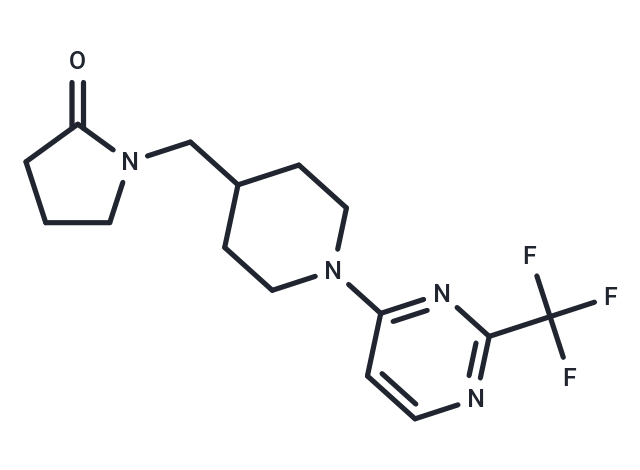
BMY-21502
CAS No. 123259-91-6
BMY-21502( —— )
Catalog No. M34527 CAS No. 123259-91-6
BMY-21502 is a potential cognitive enhancer that shows anti-hypoxia effects in the KCN-hypoxia model, delays the decay of hippocampal synaptic enhancement in vitro, and can be used to study Alzheimer's disease.
Purity : >98% (HPLC)
 COA
Datasheet
HNMR
HPLC
MSDS
Handing Instructions
COA
Datasheet
HNMR
HPLC
MSDS
Handing Instructions
| Size | Price / USD | Stock | Quantity |
| 5MG | 411 | In Stock |


|
| 10MG | 562 | In Stock |
|
| 25MG | 866 | In Stock |
|
| 100MG | Get Quote | In Stock |
|
| 200MG | Get Quote | In Stock |
|
| 500MG | Get Quote | In Stock |
|
| 1G | Get Quote | In Stock |
|
Biological Information
-
Product NameBMY-21502
-
NoteResearch use only, not for human use.
-
Brief DescriptionBMY-21502 is a potential cognitive enhancer that shows anti-hypoxia effects in the KCN-hypoxia model, delays the decay of hippocampal synaptic enhancement in vitro, and can be used to study Alzheimer's disease.
-
DescriptionBMY-21502 is a potential cognitive enhancer that shows anti-hypoxia effects in the KCN-hypoxia model, delays the decay of hippocampal synaptic enhancement in vitro, and can be used to study Alzheimer's disease.
-
In Vitro——
-
In Vivo——
-
Synonyms——
-
PathwayOthers
-
TargetAntioxidant
-
RecptorAntioxidant
-
Research Area——
-
Indication——
Chemical Information
-
CAS Number123259-91-6
-
Formula Weight328.33
-
Molecular FormulaC15H19F3N4O
-
Purity>98% (HPLC)
-
Solubility——
-
SMILESO=C1N(CCC1)CC2CCN(C3=NC(=NC=C3)C(F)(F)F)CC2
-
Chemical Name——
Shipping & Storage Information
-
Storage(-20℃)
-
ShippingWith Ice Pack
-
Stability≥ 2 years
Reference
molnova catalog



related products
-
meso-Tartaric acid m...
Tartaric acid occurs naturally in many plants particularly grapes and tamarinds and is one of the main acids found in wine.
-
2,2-Dihydroxy-1-phen...
2,2-Dihydroxy-1-phenylethan-1-one has antioxidant activity.
-
Riparin III
Riparin III (Riparin) is a smooth muscle relaxant that inhibits CaCl2-induced contractions.Riparin III has potential antioxidant, anti-inflammatory, and antidepressant properties, and may reverse the most abnormal behavioral and neurochemical changes induced by corticosterone.
