


 Cart
Cart
 sales@molnova.com


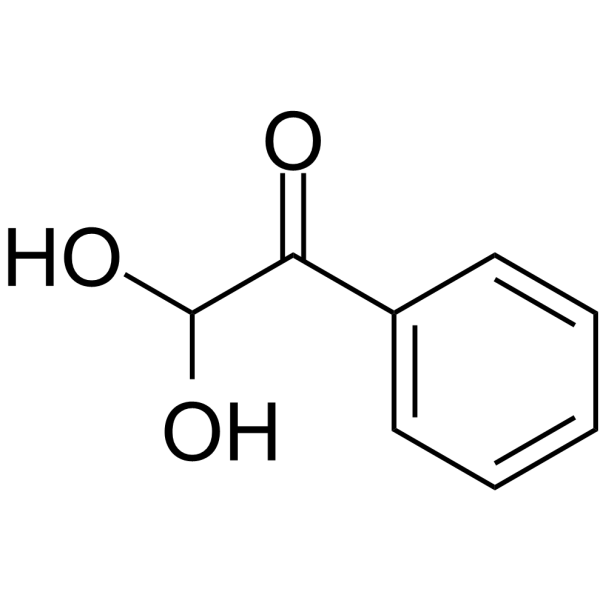
2,2-Dihydroxy-1-phenylethan-1-one
CAS No. 1075-06-5
2,2-Dihydroxy-1-phenylethan-1-one( Phenylglyoxal hydrate )
Catalog No. M28183 CAS No. 1075-06-5
2,2-Dihydroxy-1-phenylethan-1-one has antioxidant activity.
Purity : >98% (HPLC)
 COA
Datasheet
HNMR
HPLC
MSDS
Handing Instructions
COA
Datasheet
HNMR
HPLC
MSDS
Handing Instructions
| Size | Price / USD | Stock | Quantity |
| 1 mL x 10 mM in DMSO | 28 | In Stock |


|
| 100MG | Get Quote | In Stock |
|
| 200MG | 27 | In Stock |
|
| 500MG | Get Quote | In Stock |
|
| 1G | Get Quote | In Stock |
|
Biological Information
-
Product Name2,2-Dihydroxy-1-phenylethan-1-one
-
NoteResearch use only, not for human use.
-
Brief Description2,2-Dihydroxy-1-phenylethan-1-one has antioxidant activity.
-
Description2,2-Dihydroxy-1-phenylethan-1-one has antioxidant activity.
-
In Vitro——
-
In Vivo——
-
SynonymsPhenylglyoxal hydrate
-
PathwayOthers
-
TargetAntioxidant
-
RecptorHIF/HIF Prolyl-Hydroxylase
-
Research Area——
-
Indication——
Chemical Information
-
CAS Number1075-06-5
-
Formula Weight152.149
-
Molecular FormulaC8H8O3
-
Purity>98% (HPLC)
-
SolubilityIn Vitro:?DMSO : 250 mg/mL (1643.12 mM)
-
SMILESO.O=CC(=O)c1ccccc1
-
Chemical Name——
Shipping & Storage Information
-
Storage(-20℃)
-
ShippingWith Ice Pack
-
Stability≥ 2 years
Reference
1.Gaofeng Xiong, et al. Prolyl-4-hydroxylase α subunit 2 promotes breast cancer progression and metastasis by regulating collagen deposition. BMC Cancer. 2014 Jan 2;14:1.
molnova catalog



related products
-
Glycerol trilinoleat...
Glycerol trilinoleate is a triacylglycerol and has been reported to provide a number of beneficial effects including reducing thrombogenicity and arrhythmias and increasing erythrocyte deformability. It is also an antioxidant.
-
Isovitexin(b)
Isovitexin an active component of many traditional Chinese medicines shows various activities such as anti-oxidant anti-inflammatory anti-alzheimer disease (AD) effects and so on.
-
1,2,3,4,6-O-Pentagal...
1, 2, 3, 4, 6-Pentagalloylglucose and gallic acid from Pistacia lentiscus have antimutagenic and antioxidant activities.
