


 Cart
Cart
 sales@molnova.com


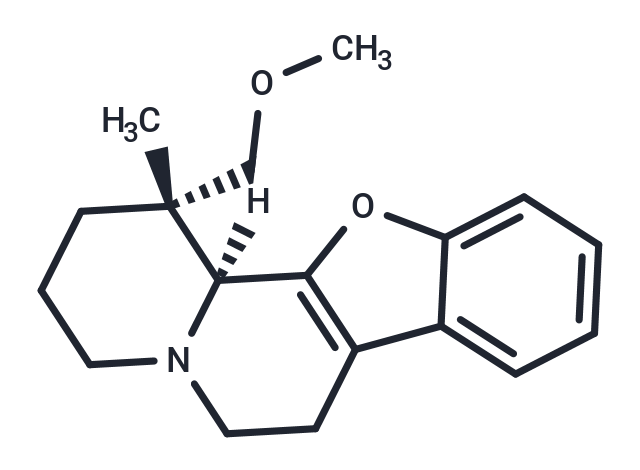
ORM-10921
CAS No. 610782-82-6
ORM-10921( —— )
Catalog No. M34365 CAS No. 610782-82-6
ORM-10921 is an α2C-adrenoceptor antagonist that has shown antipsychotic and antidepressant activity in animal studies.
Purity : >98% (HPLC)
 COA
Datasheet
HNMR
HPLC
MSDS
Handing Instructions
COA
Datasheet
HNMR
HPLC
MSDS
Handing Instructions
| Size | Price / USD | Stock | Quantity |
| 5MG | 922 | In Stock |


|
| 10MG | 1226 | In Stock |
|
| 25MG | 1853 | In Stock |
|
| 50MG | 2437 | In Stock |
|
| 100MG | Get Quote | In Stock |
|
| 200MG | Get Quote | In Stock |
|
| 500MG | Get Quote | In Stock |
|
| 1G | Get Quote | In Stock |
|
Biological Information
-
Product NameORM-10921
-
NoteResearch use only, not for human use.
-
Brief DescriptionORM-10921 is an α2C-adrenoceptor antagonist that has shown antipsychotic and antidepressant activity in animal studies.
-
DescriptionORM-10921 free base is a selective α-2C adrenergic receptor antagonist with a Ki of 1.4 nM. ORM-10921 free base displays potent antidepressant and antipsychotic-like effects.
-
In Vitro——
-
In Vivo——
-
Synonyms——
-
PathwayGPCR/G Protein
-
TargetAdrenergic Receptor
-
RecptorAdrenergic Receptor
-
Research Area——
-
Indication——
Chemical Information
-
CAS Number610782-82-6
-
Formula Weight285.38
-
Molecular FormulaC18H23NO2
-
Purity>98% (HPLC)
-
Solubility——
-
SMILESC(OC)[C@]1(C)[C@]2(C3=C(C=4C(O3)=CC=CC4)CCN2CCC1)[H]
-
Chemical Name——
Shipping & Storage Information
-
Storage(-20℃)
-
ShippingWith Ice Pack
-
Stability≥ 2 years
Reference
1. Jukka Sallinen, et al. Pharmacological characterisation of a structurally novel α2C-adrenoceptor antagonist ORM-10921 and its effects in neuropsychiatric models. Basic Clin Pharmacol Toxicol. 2013 Oct;113(4):239-49.?
molnova catalog



related products
-
Talibegron hydrochlo...
Talibegron hydrochloride (ZD2079 hydrochloride) is a β3 adrenergic receptor agonist with a pD2 of 3.72 on phenylephrine-preconstricted rat mesenteric artery.
-
Apraclonidine hydroc...
Apraclonidine hydrochloride (ALO 2145) is an α2-adrenergic agonist and a weak α-1 adrenergic receptor agonist.
-
Besipirdine hydrochl...
Besipirdine hydrochloride is a non-receptor-dependent cholinomimetic compound with alpha-adrenergic and cardiovascular activities.
