


 Cart
Cart
 sales@molnova.com


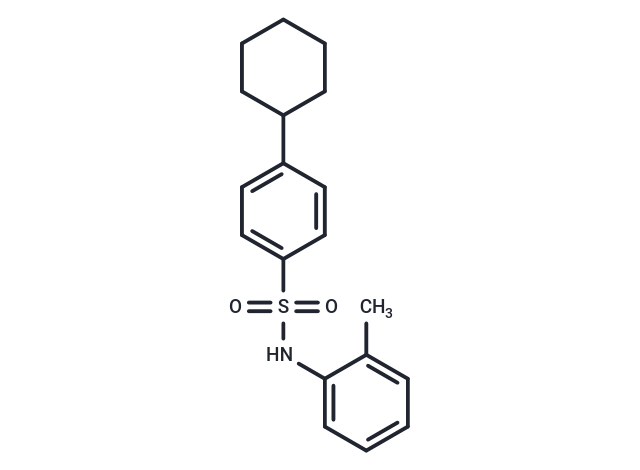
LP-471756
CAS No. 413605-11-5
LP-471756( —— )
Catalog No. M34320 CAS No. 413605-11-5
LP-471756 is a specific antagonist of GPR139 and inhibits LP-360924-stimulated cAMP production (IC50 = 640 nM).
Purity : >98% (HPLC)
 COA
Datasheet
HNMR
HPLC
MSDS
Handing Instructions
COA
Datasheet
HNMR
HPLC
MSDS
Handing Instructions
| Size | Price / USD | Stock | Quantity |
| 1 mL x 10 mM in DMSO | 29 | In Stock |


|
| 5MG | 29 | In Stock |
|
| 10MG | 44 | In Stock |
|
| 25MG | 91 | In Stock |
|
| 50MG | 145 | In Stock |
|
| 100MG | 233 | In Stock |
|
| 200MG | 328 | In Stock |
|
| 500MG | Get Quote | In Stock |
|
| 1G | Get Quote | In Stock |
|
Biological Information
-
Product NameLP-471756
-
NoteResearch use only, not for human use.
-
Brief DescriptionLP-471756 is a specific antagonist of GPR139 and inhibits LP-360924-stimulated cAMP production (IC50 = 640 nM).
-
DescriptionLP-471756 is a potent GPR139 antagonist with an IC50 value of 640 nM. LP-471756 inhibits LP-360924-stimulated cAMP production.
-
In Vitro——
-
In Vivo——
-
Synonyms——
-
PathwayCell Cycle/DNA Damage
-
TargetGPR
-
RecptorGPR
-
Research Area——
-
Indication——
Chemical Information
-
CAS Number413605-11-5
-
Formula Weight329.46
-
Molecular FormulaC19H23NO2S
-
Purity>98% (HPLC)
-
SolubilityIn Vitro:?DMSO : 250 mg/mL (758.82 mM; Ultrasonic )
-
SMILESCc1ccccc1NS(=O)(=O)c1ccc(cc1)C1CCCCC1
-
Chemical Name——
Shipping & Storage Information
-
Storage(-20℃)
-
ShippingWith Ice Pack
-
Stability≥ 2 years
Reference
1. Vedel L, et al. Pharmacology and function of the orphan GPR139 G protein-coupled receptor. Basic Clin Pharmacol Toxicol. 2020 Jun;126 Suppl 6(Suppl 6):35-46.?
molnova catalog



related products
-
DJ-V159
DJ-V159 is an agonist for G protein-coupled receptor family C group 6 member A (GPRC6A).
-
CID1231538
CID1231538 is a potent?GPR35?antagonist.
-
PFK-158
PFK-158 is an effective and specific inhibitor PFKFB3.
