


 Cart
Cart
 sales@molnova.com


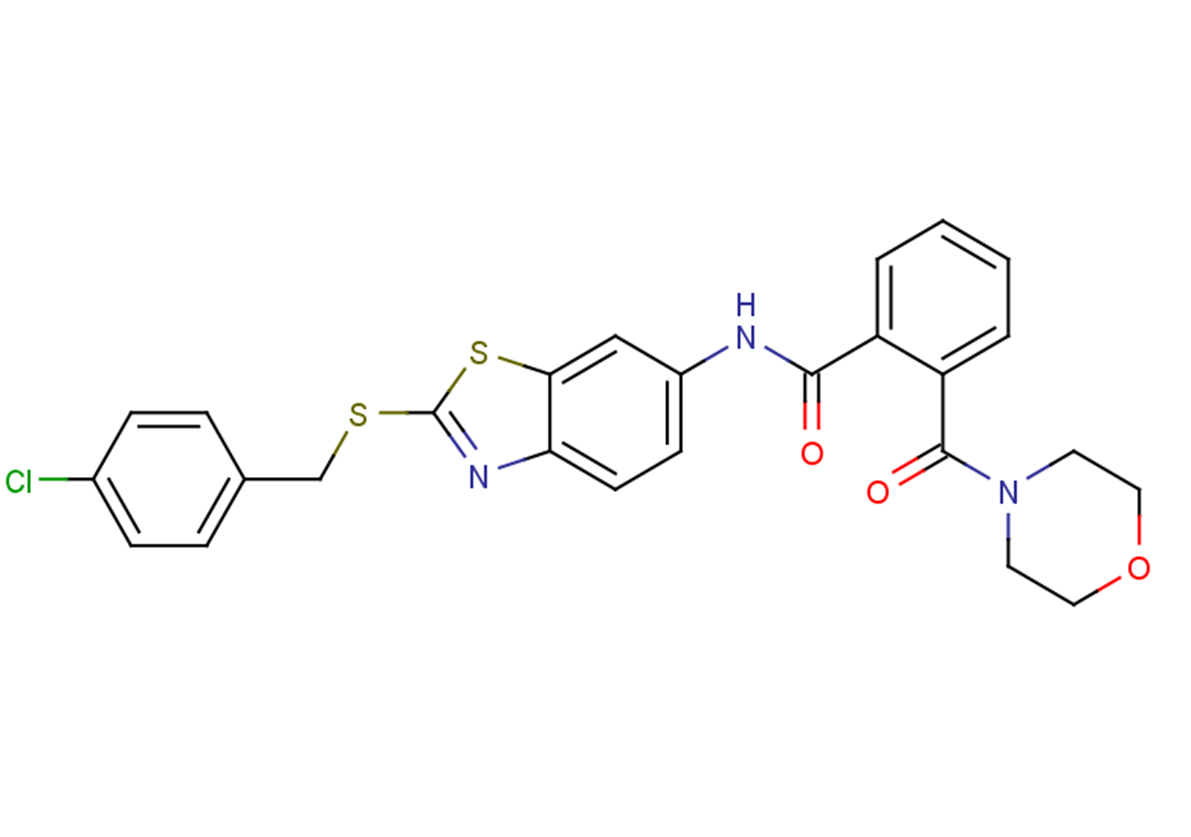
CID1231538
CAS No. 354126-20-8
CID1231538( —— )
Catalog No. M24307 CAS No. 354126-20-8
CID1231538 is a potent GPR35 antagonist.
Purity : >98% (HPLC)
 COA
Datasheet
HNMR
HPLC
MSDS
Handing Instructions
COA
Datasheet
HNMR
HPLC
MSDS
Handing Instructions
| Size | Price / USD | Stock | Quantity |
| 1 mL x 10 mM in DMSO | 150 | In Stock |


|
| 5MG | 132 | In Stock |
|
| 10MG | 211 | In Stock |
|
| 25MG | 425 | In Stock |
|
| 50MG | 613 | In Stock |
|
| 100MG | 873 | In Stock |
|
| 200MG | Get Quote | In Stock |
|
| 500MG | Get Quote | In Stock |
|
| 1G | Get Quote | In Stock |
|
Biological Information
-
Product NameCID1231538
-
NoteResearch use only, not for human use.
-
Brief DescriptionCID1231538 is a potent GPR35 antagonist.
-
DescriptionCID1231538 is a potent GPR35 antagonist.
-
In VitroGPR35 has gained special consideration as a result of its association with many diseases including type-2 diabetes, nociceptive pain, inflammation, mild mental retardation syndrome, metabolic disorders, and gastric cancer.
-
In Vivo——
-
Synonyms——
-
PathwayCell Cycle/DNA Damage
-
TargetGPR
-
RecptorGPR35
-
Research Area——
-
Indication——
Chemical Information
-
CAS Number354126-20-8
-
Formula Weight524.05
-
Molecular FormulaC26H22ClN3O3S2
-
Purity>98% (HPLC)
-
SolubilityIn Vitro:?DMSO : 50 mg/mL (95.41 mM)
-
SMILESO=C(NC1=CC=C2N=C(SCC3=CC=C(Cl)C=C3)SC2=C1)C4=CC=CC=C4C(N5CCOCC5)=O
-
Chemical Name——
Shipping & Storage Information
-
Storage(-20℃)
-
ShippingWith Ice Pack
-
Stability≥ 2 years
Reference
1.Abdalhameed MM, et al. Structure-activity relationships of benzothiazole GPR35 antagonists. Bioorg Med Chem Lett. 2017;27(3):612-615.
molnova catalog



related products
-
PFK-158
PFK-158 is an effective and specific inhibitor PFKFB3.
-
Kuwanon H
Kuwanon H is a specific antagonist for the gastrin-releasing peptide (GRP) -preferring receptor with Ki values of 290 nM and can be useful for studying the physiological and pathological role of GRP. Kuwanon H is a potent non-peptide bombesin receptor antagonist.
-
LY2881835
LY2881835 is a potent and selective GPR40 agonist.
