


 Cart
Cart
 sales@molnova.com


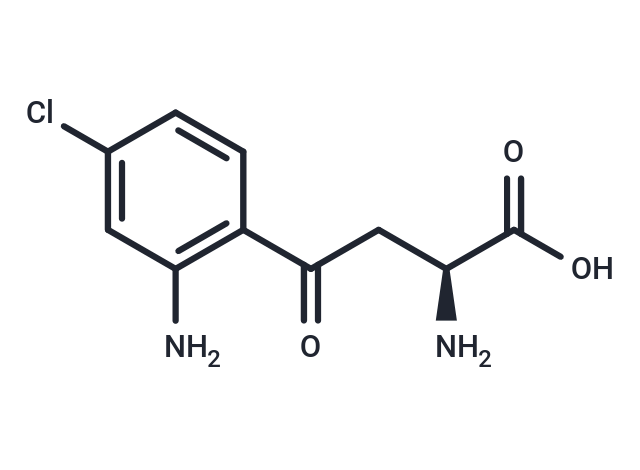
AV-101
CAS No. 153152-32-0
AV-101( —— )
Catalog No. M34167 CAS No. 153152-32-0
AV-101 (4-Cl-KYN) , a prodrug antagonist at the glycine site of the NMDA receptor, has antidepressant activity and reduces levodopa-induced dyskinesia in MPTP monkeys.
Purity : >98% (HPLC)
 COA
Datasheet
HNMR
HPLC
MSDS
Handing Instructions
COA
Datasheet
HNMR
HPLC
MSDS
Handing Instructions
| Size | Price / USD | Stock | Quantity |
| 5MG | 392 | In Stock |


|
| 10MG | 613 | In Stock |
|
| 25MG | 1026 | In Stock |
|
| 50MG | 1376 | In Stock |
|
| 100MG | 1823 | In Stock |
|
| 200MG | 2446 | In Stock |
|
| 500MG | Get Quote | In Stock |
|
| 1G | Get Quote | In Stock |
|
Biological Information
-
Product NameAV-101
-
NoteResearch use only, not for human use.
-
Brief DescriptionAV-101 (4-Cl-KYN) , a prodrug antagonist at the glycine site of the NMDA receptor, has antidepressant activity and reduces levodopa-induced dyskinesia in MPTP monkeys.
-
DescriptionAV-101 (4-Cl-KYN) , a prodrug antagonist at the glycine site of the NMDA receptor, has antidepressant activity and reduces levodopa-induced dyskinesia in MPTP monkeys.
-
In Vitro——
-
In Vivo——
-
Synonyms——
-
PathwayMembrane Transporter/Ion Channel
-
TargetNMDAR
-
RecptorNMDAR
-
Research Area——
-
Indication——
Chemical Information
-
CAS Number153152-32-0
-
Formula Weight242.66
-
Molecular FormulaC10H11ClN2O3
-
Purity>98% (HPLC)
-
Solubility——
-
SMILESC(C[C@@H](C(O)=O)N)(=O)C1=C(N)C=C(Cl)C=C1
-
Chemical Name——
Shipping & Storage Information
-
Storage(-20℃)
-
ShippingWith Ice Pack
-
Stability≥ 2 years
Reference
molnova catalog



related products
-
BZAD01
BZAD01 is a selective NMDA NR1A/2B receptor antagonist.
-
Sennoside B
Sennoside B is an anthranoid. Anthranoid derivatives are used all over the world as a treatment for constipation.
-
N-Methyl-DL-aspartic...
N-Methyl-DL-aspartic acid, a glutamate analogue and NMDA receptor agonist, is utilized in neurological disease research.
