


 Cart
Cart
 sales@molnova.com


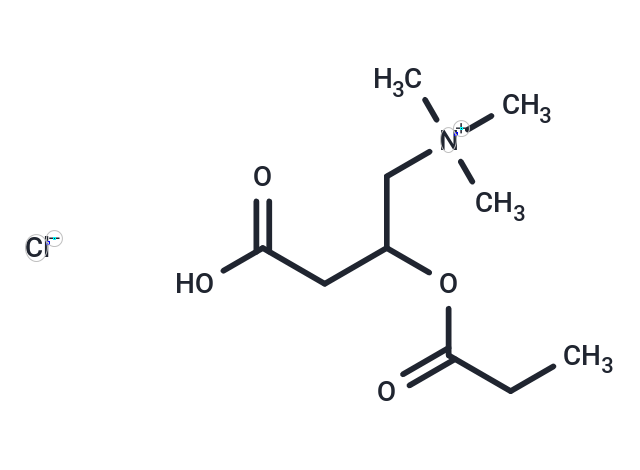
(±)-Propionylcarnitine chloride
CAS No. 18828-58-5
(±)-Propionylcarnitine chloride( —— )
Catalog No. M33819 CAS No. 18828-58-5
(±)-Propionylcarnitine chloride (Propionyl-DL-carnitine chloride) is a mixture of short-chain acylcarnitines used as a dietary supplement for the study of chronic diabetes.
Purity : >98% (HPLC)
 COA
Datasheet
HNMR
HPLC
MSDS
Handing Instructions
COA
Datasheet
HNMR
HPLC
MSDS
Handing Instructions
| Size | Price / USD | Stock | Quantity |
| 10MG | 38 | In Stock |


|
| 25MG | 65 | In Stock |
|
| 100MG | Get Quote | In Stock |
|
| 200MG | Get Quote | In Stock |
|
| 500MG | Get Quote | In Stock |
|
| 1G | Get Quote | In Stock |
|
Biological Information
-
Product Name(±)-Propionylcarnitine chloride
-
NoteResearch use only, not for human use.
-
Brief Description(±)-Propionylcarnitine chloride (Propionyl-DL-carnitine chloride) is a mixture of short-chain acylcarnitines used as a dietary supplement for the study of chronic diabetes.
-
DescriptionPropionyl-DL-carnitine chloride is a carnitine derivative. Propionyl-DL-carnitine chloride can be used for the research of inflammation.
-
In VitroPropionyl-DL-carnitine chloride shows protection to beta-thalassaemic erythrocytes from oxidative stress.Propionyl-DL-carnitine chloride increases production of 14CO2 from [1-14C]pyruvate and increases the rate of formation of acetyl camitine from pyruvate.Propionyl-DL-carnitine chloride allows the endothelial cells to maintain their functionality and regulatory role on vessel activity for a longer time and decreases the formation of oxygen reactive species due to xanthine oxidase activity on hypoxanthine formed by adenine nucleotide catabolism.
-
In VivoPropionyl-DL-carnitine chloride (2 mM/kg; p.o. once daily for 4 weeks) affects plasma and urine total carnitine concentrations of mice.Animal Model:Adult age-matched male C57BL/6 mice Dosage:2 mM/kg Administration: Oral gavage; 2 mM/kg/day for 4 weeks Result:Increased plasma and urine total carnitine concentrations, but showed no effect on the skeletal muscle carnitine content of mice.
-
Synonyms——
-
PathwayProteasome/Ubiquitin
-
TargetEndogenous Metabolite
-
RecptorEndogenous Metabolite
-
Research Area——
-
Indication——
Chemical Information
-
CAS Number18828-58-5
-
Formula Weight253.72
-
Molecular FormulaC10H20ClNO4
-
Purity>98% (HPLC)
-
SolubilityIn Vitro:?Methanol : 250 mg/mL (985.34 mM; Ultrasonic)DMSO : 100 mg/mL (394.14 mM; Ultrasonic )
-
SMILES[Cl-].CCC(=O)OC(CC(O)=O)C[N+](C)(C)C
-
Chemical Name——
Shipping & Storage Information
-
Storage(-20℃)
-
ShippingWith Ice Pack
-
Stability≥ 2 years
Reference
1. Palmieri L, et al. Protection of beta-thalassaemic erythrocytes from oxidative stress by propionyl carnitine. Int J Tissue React. 1994;16(3):121-9.?
molnova catalog



related products
-
Guanylin (human)
Endogenous peptide activator of intestinal guanylyl cyclase; secreted mainly by the gastrointestinal mucosa. Regulates water and electrolyte transport in intestinal and renal epithelia.
-
DL-α-tocopherol acet...
DL-α-tocopherol acetate (Vitamin E acetate) is a vitamin E derivative used as a vitamin E supplement in poultry feed.
-
Adenosine triphospha...
Adenosine triphosphate is an adenine nucleotide containing three phosphate groups esterified to the sugar moiety.
