


 Cart
Cart
 sales@molnova.com


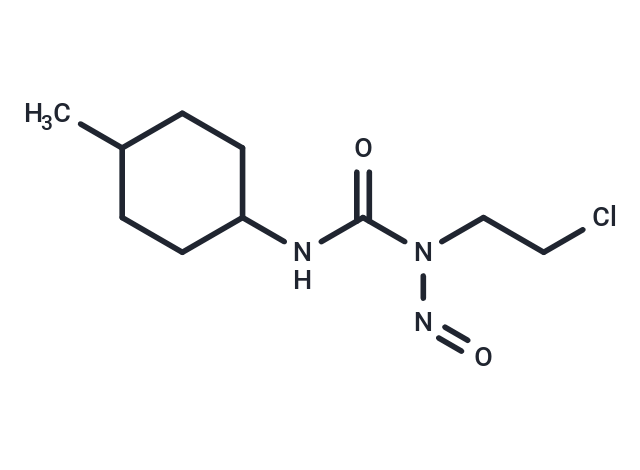
Semustine
CAS No. 13909-09-6
Semustine( —— )
Catalog No. M33496 CAS No. 13909-09-6
Semustine, a DNA alkylating agent, is a cancer chemotherapy compound that is nephrotoxic in patients with malignant melanoma receiving adjuvant chemotherapy for the adjuvant treatment of leukemia.
Purity : >98% (HPLC)
 COA
Datasheet
HNMR
HPLC
MSDS
Handing Instructions
COA
Datasheet
HNMR
HPLC
MSDS
Handing Instructions
| Size | Price / USD | Stock | Quantity |
| 5MG | 154 | In Stock |


|
| 10MG | 228 | In Stock |
|
| 25MG | 390 | In Stock |
|
| 50MG | 535 | In Stock |
|
| 100MG | 747 | In Stock |
|
| 200MG | 1004 | In Stock |
|
| 500MG | Get Quote | In Stock |
|
| 1G | Get Quote | In Stock |
|
Biological Information
-
Product NameSemustine
-
NoteResearch use only, not for human use.
-
Brief DescriptionSemustine, a DNA alkylating agent, is a cancer chemotherapy compound that is nephrotoxic in patients with malignant melanoma receiving adjuvant chemotherapy for the adjuvant treatment of leukemia.
-
DescriptionSemustine is a DNA alkylator, binds to DNA, and acts as a cancer chemotherapeutic agent.
-
In Vitro——
-
In Vivo——
-
Synonyms——
-
PathwayOthers
-
TargetOther Targets
-
RecptorDNA Alkylator/Crosslinker
-
Research Area——
-
Indication——
Chemical Information
-
CAS Number13909-09-6
-
Formula Weight247.72
-
Molecular FormulaC10H18ClN3O2
-
Purity>98% (HPLC)
-
SolubilityIn Vitro:?DMSO : 100 mg/mL (403.68 mM; Ultrasonic ) Ethanol : 50 mg/mL (201.84 mM; Ultrasonic)
-
SMILESN(C(N(CCCl)N=O)=O)C1CCC(C)CC1
-
Chemical Name——
Shipping & Storage Information
-
Storage(-20℃)
-
ShippingWith Ice Pack
-
Stability≥ 2 years
Reference
1. Agarwal S, et al. Molecular modeling and spectroscopic studies of semustine binding with DNA and its comparison with lomustine-DNA adduct formation. J Biomol Struct Dyn. 2015;33(8):1653-68.?
molnova catalog



related products
-
Gymnemagenin
Gymnemagenin is a potent and selective antagonist for the β isoform of LXR it has antihyperglycemic activity.
-
BAM - 18P
BAM - 18P
-
CB-TH
CB-TH
