


 Cart
Cart
 sales@molnova.com


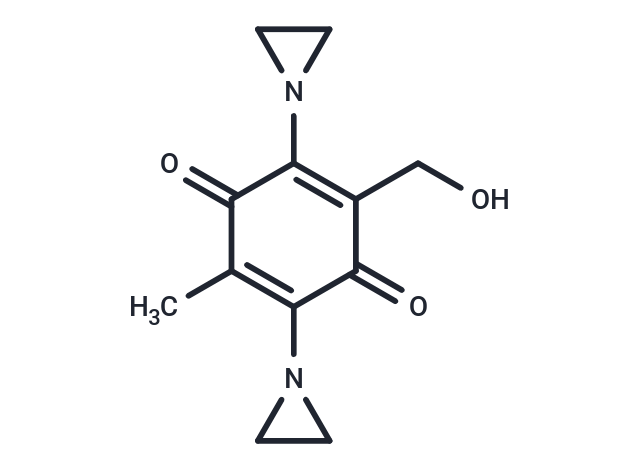
RH1
CAS No. 221635-42-3
RH1( —— )
Catalog No. M33479 CAS No. 221635-42-3
RH1 (NSC 697726) is a bioreductive anticancer compound that exhibits dose-dependent biphasic effects in vitro, inducing apoptosis at higher doses and senescence at lower doses.
Purity : >98% (HPLC)
 COA
Datasheet
HNMR
HPLC
MSDS
Handing Instructions
COA
Datasheet
HNMR
HPLC
MSDS
Handing Instructions
| Size | Price / USD | Stock | Quantity |
| 5MG | 424 | In Stock |


|
| 10MG | 682 | In Stock |
|
| 25MG | 1378 | In Stock |
|
| 50MG | 1841 | In Stock |
|
| 100MG | Get Quote | In Stock |
|
| 200MG | Get Quote | In Stock |
|
| 500MG | Get Quote | In Stock |
|
| 1G | Get Quote | In Stock |
|
Biological Information
-
Product NameRH1
-
NoteResearch use only, not for human use.
-
Brief DescriptionRH1 (NSC 697726) is a bioreductive anticancer compound that exhibits dose-dependent biphasic effects in vitro, inducing apoptosis at higher doses and senescence at lower doses.
-
DescriptionRH1 (NSC 697726) is a bioreductive anticancer compound that exhibits dose-dependent biphasic effects in vitro, inducing apoptosis at higher doses and senescence at lower doses.
-
In Vitro——
-
In Vivo——
-
Synonyms——
-
PathwayApoptosis
-
TargetApoptosis
-
RecptorApoptosis
-
Research Area——
-
Indication——
Chemical Information
-
CAS Number221635-42-3
-
Formula Weight234.25
-
Molecular FormulaC12H14N2O3
-
Purity>98% (HPLC)
-
Solubility——
-
SMILESO=C1C(=C(C(=O)C(=C1C)N2CC2)CO)N3CC3
-
Chemical Name——
Shipping & Storage Information
-
Storage(-20℃)
-
ShippingWith Ice Pack
-
Stability≥ 2 years
Reference
molnova catalog



related products
-
1-beta-D-Arabinofura...
1-beta-D-Arabinofuranosylthymine (Thymine 1-β-D-arabinofuranoside) is a purine nucleoside analog. Purine nucleoside analogs have a broad spectrum of antitumor activity, targeting inert lymphoid malignancies and inducing apoptosis.
-
Lonicerin
Lonicerin has antioxidant, anti-arthritic and antifungal activities, it can result in a combination therapy for the treatment of fungal arthritis due to C. albicans infection.
-
Stearoylethanolamide
Stearoylethanolamide(N-(2-Hydroxyethyl)octadecanamide) is a cannabinoid compound present in the brains of humans, rats, and mice with pro-apoptotic activity.
