


 Cart
Cart
 sales@molnova.com


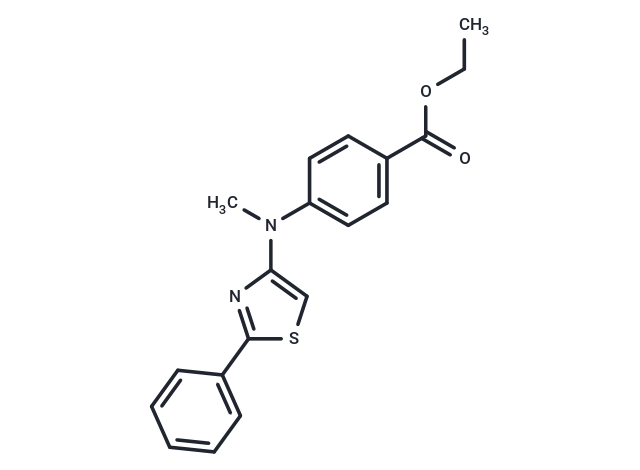
Neuropathiazol
CAS No. 880090-88-0
Neuropathiazol( —— )
Catalog No. M33442 CAS No. 880090-88-0
Neuropathiazol causes neuronal differentiation of adult hippocampal neural progenitor cells.
Purity : >98% (HPLC)
 COA
Datasheet
HNMR
HPLC
MSDS
Handing Instructions
COA
Datasheet
HNMR
HPLC
MSDS
Handing Instructions
| Size | Price / USD | Stock | Quantity |
| 1 mL x 10 mM in DMSO | 123 | In Stock |


|
| 5MG | 113 | In Stock |
|
| 10MG | 180 | In Stock |
|
| 25MG | 367 | In Stock |
|
| 50MG | 523 | In Stock |
|
| 100MG | 761 | In Stock |
|
| 200MG | Get Quote | In Stock |
|
| 500MG | Get Quote | In Stock |
|
| 1G | Get Quote | In Stock |
|
Biological Information
-
Product NameNeuropathiazol
-
NoteResearch use only, not for human use.
-
Brief DescriptionNeuropathiazol causes neuronal differentiation of adult hippocampal neural progenitor cells.
-
DescriptionNeuropathiazol, a neuronal differentiation inducer, selectively induces neuronal differentiation of multipotent hippocampal neural progenitor cells.
-
In VitroNeuropathiazol (5-15 μM; 5 hours) significantly slows cell proliferation without visible cytotoxic effects.Neuropathiazol (10 μM; 1-4 days) down-regulates Sox2 (a neural progenitor marker) and up-regulates NeuroD1 (a neuronal cell marker). Neuropathiazol also inhibits astroglial differentiation that is induced by LIF and BMP2.Neuropathiazol induces neuronal differentiation of multipotent adult hippocampal neural progenitor cells.Neuropathiazol can competitively suppress astrogliogenesis by LIF/BMP2/FBS in a dose-dependent manner.Cell Proliferation Assay Cell Line:HCN cells Concentration:5 μM, 10 μM, 15 μM Incubation Time:5 hours Result:Inhibited proliferation of HCN neural progenitor cells.RT-PCR Cell Line:HCN cells Concentration:10 μM Incubation Time:1 day, 4 days Result:Downregulated Sox2 and upregulated NeuroD1.
-
In Vivo——
-
Synonyms——
-
PathwayOthers
-
TargetOther Targets
-
RecptorOthers
-
Research Area——
-
Indication——
Chemical Information
-
CAS Number880090-88-0
-
Formula Weight338.42
-
Molecular FormulaC19H18N2O2S
-
Purity>98% (HPLC)
-
SolubilityIn Vitro:?DMSO : 33.33 mg/mL (98.49 mM; Ultrasonic )
-
SMILESCCOC(=O)C1=CC=C(C=C1)N(C)C1=CSC(=N1)C1=CC=CC=C1
-
Chemical Name——
Shipping & Storage Information
-
Storage(-20℃)
-
ShippingWith Ice Pack
-
Stability≥ 2 years
Reference
1. Warashina M, et al. A synthetic small molecule that induces neuronal differentiation of adult hippocampal neural progenitor cells. Angew Chem Int Ed Engl. 2006 Jan 16;45(4):591-3.?
molnova catalog



related products
-
ES9-17
ES9-17, an analog of ES9 (endosidin9), is an inhibitor of clathrin-mediated endocytosis (CME). ES9-17 inhibits the uptake of FM4-64 and transferrin. ES9-17 inhibits root growth of Arabidopsis seedings.
-
3,5-Dimethoxybenzyla...
3,5-Dimethoxybenzylalcohol is a natural product from Pinus sylvestris.
-
Lactulose
Lactulose is a non-absortable sugar used in the treatment of constipation and hepatic encephalopathy.
