


 Cart
 sales@molnova.com


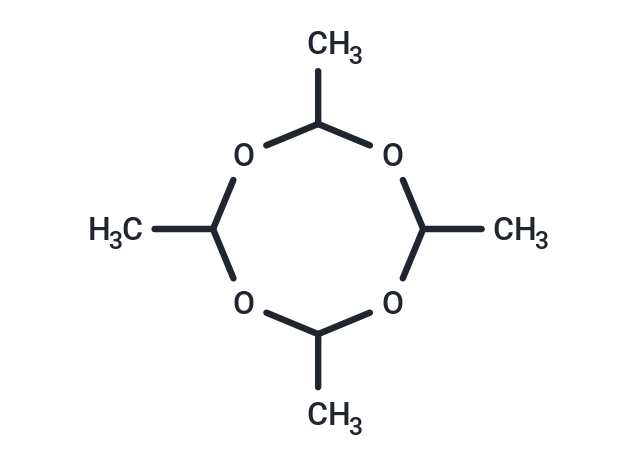
Metaldehyde
CAS No. 108-62-3
Metaldehyde( —— )
Catalog No. M33429 CAS No. 108-62-3
Metaldehyde (Metacetaldehyde) is an agriculturally used molluscicide that induces DNA fragmentation in cells.
Purity : >98% (HPLC)
 COA
Datasheet
HNMR
HPLC
MSDS
Handing Instructions
| Size | Price / USD | Stock | Quantity |
| 100MG | Get Quote | In Stock |


|
| 200MG | Get Quote | In Stock |
|
| 500MG | Get Quote | In Stock |
|
| 1G | 29 | In Stock |
|
Biological Information
-
Product NameMetaldehyde
-
NoteResearch use only, not for human use.
-
Brief DescriptionMetaldehyde (Metacetaldehyde) is an agriculturally used molluscicide that induces DNA fragmentation in cells.
-
DescriptionMetaldehyde is commonly used as a pesticide against slugs, snails, and other gastropods.
-
In Vitro——
-
In Vivo——
-
Synonyms——
-
PathwayOthers
-
TargetOther Targets
-
RecptorOthers
-
Research Area——
-
Indication——
Chemical Information
-
CAS Number108-62-3
-
Formula Weight176.21
-
Molecular FormulaC8H16O4
-
Purity>98% (HPLC)
-
SolubilityIn Vitro:?DMSO : 1.82 mg/mL (10.33 mM; Ultrasonic (<60°C)
-
SMILESO1C(OC(OC(OC1C)C)C)C
-
Chemical Name——
Shipping & Storage Information
-
Storage(-20℃)
-
ShippingWith Ice Pack
-
Stability≥ 2 years
Reference
molnova catalog



related products
-
Coelenteramine 400a
Coelenteramine 400a (Coelenterazine 400a), a Coelenterazine derivative, serves as a substrate for Renilla luciferase (RLuc), facilitating the emission of blue light at 395 nm.
-
SNAP-25 187-203
This amino acids187 to 203 fragment is derived from the C-terminal helix of synaptosomal-associated protein of 25 kDa (SNAP-25). This peptide is able to rescue exocytosis from botulinum neurotoxin E (BoNT/E)-treated cells, albeit at higher concentrations than the full-length coil.
-
TAK-448
TAK-448 (MVT-602) is a potent and full KISS1R agonist with an IC50 of 460 pM and an EC50 of 632 pM.TAK-448 has been used in trials studying the treatment of Prostate Cancer, Low Testosterone, Prostatic Neoplasms, and Hypogonadotropic Hypogonadism.
