


 Cart
Cart
 sales@molnova.com


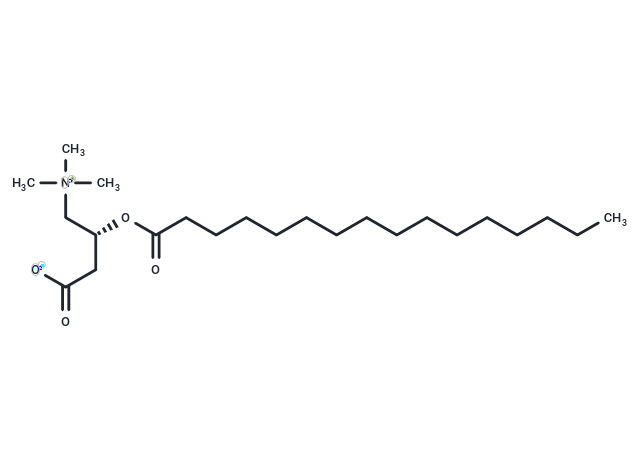
L-Palmitoylcarnitine
CAS No. 2364-67-2
L-Palmitoylcarnitine( —— )
Catalog No. M33400 CAS No. 2364-67-2
L-Palmitoylcarnitine (L-PC) is an important endogenous fatty acid metabolite that inhibits Na/K ATPase activity and potentiates fibrinolytic enzymes and tPA to inhibit thrombosis.
Purity : >98% (HPLC)
 COA
Datasheet
HNMR
HPLC
MSDS
Handing Instructions
COA
Datasheet
HNMR
HPLC
MSDS
Handing Instructions
| Size | Price / USD | Stock | Quantity |
| 5MG | 306 | In Stock |


|
| 10MG | 455 | In Stock |
|
| 25MG | 730 | In Stock |
|
| 50MG | 977 | In Stock |
|
| 100MG | Get Quote | In Stock |
|
| 200MG | Get Quote | In Stock |
|
| 500MG | Get Quote | In Stock |
|
| 1G | Get Quote | In Stock |
|
Biological Information
-
Product NameL-Palmitoylcarnitine
-
NoteResearch use only, not for human use.
-
Brief DescriptionL-Palmitoylcarnitine (L-PC) is an important endogenous fatty acid metabolite that inhibits Na/K ATPase activity and potentiates fibrinolytic enzymes and tPA to inhibit thrombosis.
-
DescriptionL-Palmitoylcarnitine (L-PC) is an important endogenous fatty acid metabolite that inhibits Na/K ATPase activity and potentiates fibrinolytic enzymes and tPA to inhibit thrombosis.
-
In Vitro——
-
In Vivo——
-
Synonyms——
-
PathwayEndocrinology/Hormones
-
TargetATPase
-
RecptorATPase
-
Research Area——
-
Indication——
Chemical Information
-
CAS Number2364-67-2
-
Formula Weight399.61
-
Molecular FormulaC23H45NO4
-
Purity>98% (HPLC)
-
Solubility——
-
SMILES[C@H](OC(CCCCCCCCCCCCCCC)=O)(C[N+](C)(C)C)CC([O-])=O
-
Chemical Name——
Shipping & Storage Information
-
Storage(-20℃)
-
ShippingWith Ice Pack
-
Stability≥ 2 years
Reference
molnova catalog



related products
-
Paederosidic acid me...
Paederosidic acid methyl ester has antinociception, is possibly related to the pathway of NO-cGMP-ATP sensitive K(+) channels.
-
Liriodendrin
Liriodendrin regulates lung inflammation, the phosphorylation of the NF-kB (p65) and expression of vascular endothelial growth factor (VEGF).
-
Acetylcysteine
Acetylcysteine is a derivative of cysteine; an acetyl group that is attached to the nitrogen atom.
