


 Cart
Cart
 sales@molnova.com


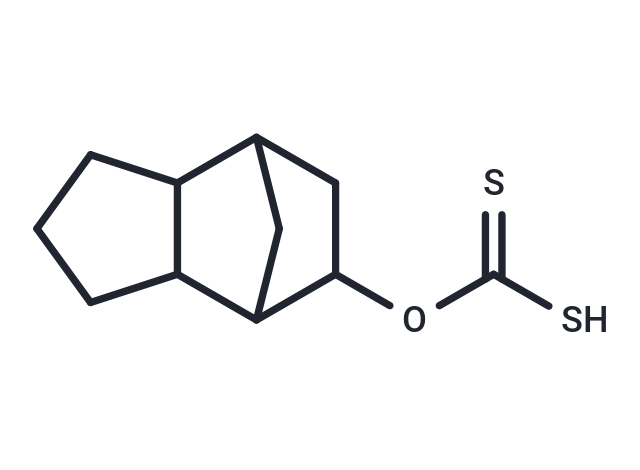
D609
CAS No. 83373-60-8
D609( —— )
Catalog No. M33331 CAS No. 83373-60-8
D609 (Tricyclodecan-9-yl-Xanthogenate) has a wide range of biological activities including antioxidant, antiapoptotic, anticholinergic, antitumor, anti-inflammatory, antiviral, antiproliferative, and neuroprotective activities.
Purity : >98% (HPLC)
 COA
Datasheet
HNMR
HPLC
MSDS
Handing Instructions
COA
Datasheet
HNMR
HPLC
MSDS
Handing Instructions
| Size | Price / USD | Stock | Quantity |
| 1 mL x 10 mM in DMSO | 56 | In Stock |


|
| 5MG | 50 | In Stock |
|
| 10MG | 79 | In Stock |
|
| 25MG | 128 | In Stock |
|
| 50MG | 183 | In Stock |
|
| 100MG | 269 | In Stock |
|
| 200MG | Get Quote | In Stock |
|
| 500MG | Get Quote | In Stock |
|
| 1G | Get Quote | In Stock |
|
Biological Information
-
Product NameD609
-
NoteResearch use only, not for human use.
-
Brief DescriptionD609 (Tricyclodecan-9-yl-Xanthogenate) has a wide range of biological activities including antioxidant, antiapoptotic, anticholinergic, antitumor, anti-inflammatory, antiviral, antiproliferative, and neuroprotective activities.
-
DescriptionD609, an antitumoural xanthate, is a specific and competitive phosphatidyl choline-specific phospholipase C (PC-PLC) inhibitor with a Ki of 6.4 μM. D609 is an antioxidative protector and has antiviral and anti-inflammatory activity.
-
In VitroCell Proliferation AssayCell Line:RAW 264.7 macrophages, N9 and BV-2 microglia, and DITNC1 astrocytes,Concentration:100 μM Incubation Time:For 2 hoursResult:Significantly attenuated the proliferation of RAW 264.7 macrophages, N9 and BV-2 microglia, and DITNC1 astrocytes, without affecting cell viability.Apoptosis Analysis Cell Line:BV-2 cells Concentration:50, 100 and 200 μM Incubation Time:For 2 hours Result:Activated caspase-3 in a dose- and time-dependent manner. Cell Cycle Analysis Cell Line:BV-2 cells Concentration:100 μM Incubation Time:For 2 hours Result:Significantly inhibited BrdU incorporation in BV-2 microglia and caused accumulation of cells in G1 phase with decreased number of cells in the S phase.Western Blot Analysis Cell Line:BV-2 cells Concentration:100 μM Incubation Time:For 2 hours Result:Increased ceramide levels, up-regulated p21 expression and causes a decreased in phospho-Rb.
-
In VivoAnimal Model:26-week-old apoE?/? and C57BL/6 WT mice Dosage:2.5, 10 mg/kg Administration:IP; per day for 6 weeks Result:Inhibited the progression of preexisting atherosclerotic lesions in apoE?/? mice and changed the lesion composition into a more stable phenotype. Significantly decreased the aortic endothelial expression of the vascular cell adhesion molecule-1 and the intercellular adhesion molecule-1.
-
Synonyms——
-
PathwayApoptosis
-
TargetApoptosis
-
RecptorApoptosis | Antioxidant
-
Research Area——
-
Indication——
Chemical Information
-
CAS Number83373-60-8
-
Formula Weight266.46
-
Molecular FormulaC11H15KOS2
-
Purity>98% (HPLC)
-
SolubilityIn Vitro:?DMSO : 100 mg/mL (375.29 mM; Ultrasonic ) H2O : 2 mg/mL (7.51 mM; Ultrasonic)
-
SMILESSC(=S)OC1CC2CC1C1CCCC21
-
Chemical Name——
Shipping & Storage Information
-
Storage(-20℃)
-
ShippingWith Ice Pack
-
Stability≥ 2 years
Reference



-
Vitamin E succinate
Vitamin E succinate (D-alpha-Tocopherol Succinate) is an antioxidant tocopherol that belongs to the vitamin E class of compounds Vitamin E succinate has antitumor activity, induces apoptosis, and is used as an adjuvant in the treatment of cancer and in the synthesis of INVITE, a biocoupling compound.
-
Ecdysone
Ecdysone is a major steroid hormone in insects and herbs. Ecdysone triggers mineralocorticoid receptor activation and induces cellular apoptosis. Ecdysone signaling through Ecdysone receptor isoform B1 is required cell autonomously for the muscle death.
-
Eriocalyxin B
Eriocalyxin B induces apoptosis and cell cycle arrest in pancreatic adenocarcinoma cells through caspase- and p53-dependent pathways, should be considered a candidate for pancreatic cancer treatment.
