


 Cart
Cart
 sales@molnova.com


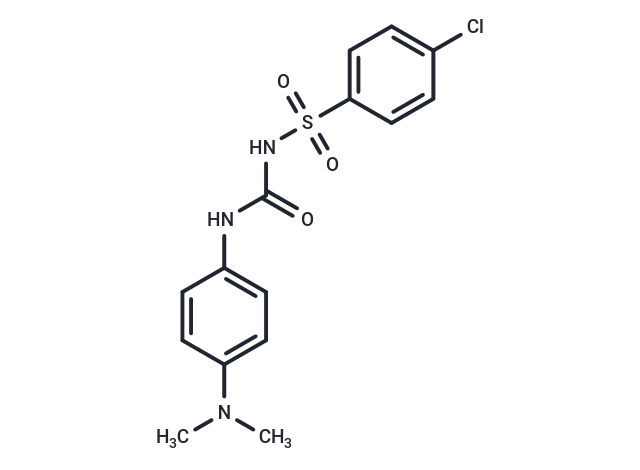
Glyparamide
CAS No. 5581-42-0
Glyparamide( —— )
Catalog No. M33220 CAS No. 5581-42-0
Glyparamide is a hypoglycemic compound that reduces platelet aggregation, resulting in less atherosclerotic plaque formation.
Purity : >98% (HPLC)
 COA
Datasheet
HNMR
HPLC
MSDS
Handing Instructions
COA
Datasheet
HNMR
HPLC
MSDS
Handing Instructions
| Size | Price / USD | Stock | Quantity |
| 1 mL x 10 mM in DMSO | 38 | In Stock |


|
| 5MG | 35 | In Stock |
|
| 10MG | 53 | In Stock |
|
| 25MG | 93 | In Stock |
|
| 50MG | 129 | In Stock |
|
| 100MG | 184 | In Stock |
|
| 200MG | Get Quote | In Stock |
|
| 500MG | 456 | In Stock |
|
| 1G | Get Quote | In Stock |
|
Biological Information
-
Product NameGlyparamide
-
NoteResearch use only, not for human use.
-
Brief DescriptionGlyparamide is a hypoglycemic compound that reduces platelet aggregation, resulting in less atherosclerotic plaque formation.
-
DescriptionGlyparamide is an orally active chlorophenyl-containing sulfonylurea. Glyparamide shows hypoglycemic activity and rarely causes hepatic injury.
-
In Vitro——
-
In Vivo——
-
Synonyms——
-
PathwayOthers
-
TargetOther Targets
-
RecptorOthers
-
Research Area——
-
Indication——
Chemical Information
-
CAS Number5581-42-0
-
Formula Weight353.82
-
Molecular FormulaC15H16ClN3O3S
-
Purity>98% (HPLC)
-
SolubilityIn Vitro:?DMSO : 55 mg/mL (155.45 mM; Ultrasonic )
-
SMILESO=C(NC1=CC=C(C=C1)N(C)C)NS(=O)(=O)C2=CC=C(Cl)C=C2
-
Chemical Name——
Shipping & Storage Information
-
Storage(-20℃)
-
ShippingWith Ice Pack
-
Stability≥ 2 years
Reference
1. Yuntao Liu, et al. Emerging Theranostic Nanomaterials in Diabetes and Its Complications. Adv Sci (Weinh). 2022 Jan;9(3):e2102466.?
molnova catalog



related products
-
L-Glutamine
L-glutamine is a non-essential amino acid present abundantly throughout the body and is involved in many metabolic processes.
-
Troxerutin
Troxerutin, a natural bioflavonoid isolated from Sophora japonica., has been reported to have many benefits and medicinal properties.
-
Neoolivil
Neoolivil
