


 Cart
Cart
 sales@molnova.com


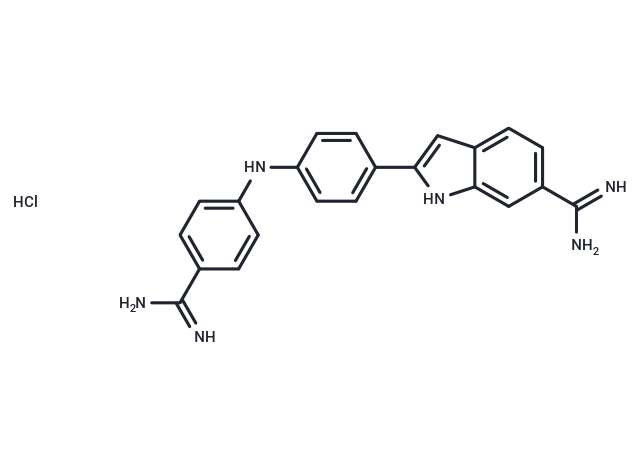
Synucleozid hydrochloride
CAS No. 2741856-68-6
Synucleozid hydrochloride( —— )
Catalog No. M33133 CAS No. 2741856-68-6
Synucleozid hydrochloride inhibits the translation of the intrinsically disordered protein α-synuclein by targeting its structured mRNA.
Purity : >98% (HPLC)
 COA
Datasheet
HNMR
HPLC
MSDS
Handing Instructions
COA
Datasheet
HNMR
HPLC
MSDS
Handing Instructions
| Size | Price / USD | Stock | Quantity |
| 2MG | 301 | In Stock |


|
| 100MG | Get Quote | In Stock |
|
| 200MG | Get Quote | In Stock |
|
| 500MG | Get Quote | In Stock |
|
| 1G | Get Quote | In Stock |
|
Biological Information
-
Product NameSynucleozid hydrochloride
-
NoteResearch use only, not for human use.
-
Brief DescriptionSynucleozid hydrochloride inhibits the translation of the intrinsically disordered protein α-synuclein by targeting its structured mRNA.
-
DescriptionSynucleozid hydrochloride (NSC 377363 hydrochloride) is a potent inhibitor of the SNCA mRNA that encodes α-synuclein protein. Synucleozid selectively targets the α-synuclein mRNA 5′ UTR at the designed IRE site, decreases the amount of SNCA mRNA loaded into polysomes and thereby inhibits SNCA translation. Synucleozid has the potential for the investigation of Parkinson’s disease.
-
In VitroSynucleozid (0.25-1 μM; 24 hours) abrogates cytotoxicity induced by α-synuclein preformed fibrils, which act as seeds and recruit endogenous α-synuclein to aggregate.Synucleozid (0-1 μM; 24 hours) binds to the A bulge near the base of the IRE hairpin, reduced levels of α-synuclein in a dose-dependent manner with an IC50 of 500 nM, and inhibits α-synuclein protein expression in SH-SY5Y neuroblastoma cells.Synucleozid (100 nM-100 μM; 24 hours) binds to 2-AP-labeled and native IRE RNA with similar affinities. It decreases 2-AP emission with an EC50?value of 2.7 ± 0.4 μM, recovery of 2-AP emissions is observed as a function of unlabeled?SNCA?IRE RNA (RNA-0) concentration, affording a competitive?Kd?of 1.5 ± 0.3 μM.Synucleozid (0.25-1 μM; 24 hours) decreases α-synuclein and other proteins that have IREs in their mRNA’s UTR including APP, PrP, Ferritin and TfR as a dose-dependent mannner. All panels is completed in SH-SY5Y cells, except for PrP protein which is assessed in Neuro-2A cells.Cell Viability Assay Cell Line:SH-SY5Y neuroblastoma cells Concentration:0.25 μM, 0.5 μM, 1 μM Incubation Time:24 hours Result:Decreased LDH release as a dose-dependent manner.Western Blot Analysis Cell Line:SH-SY5Y neuroblastoma cells Concentration:0.25 μM, 0.5 μM, 1 μM Incubation Time:24 hours Result:Decreased α-synuclein expression as a concentration-dependent manner.
-
In Vivo——
-
Synonyms——
-
PathwayCell Cycle/DNA Damage
-
TargetDNA/RNA Synthesis
-
RecptorDNA/RNA Synthesis
-
Research Area——
-
Indication——
Chemical Information
-
CAS Number2741856-68-6
-
Formula Weight404.9
-
Molecular FormulaC22H21ClN6
-
Purity>98% (HPLC)
-
SolubilityIn Vitro:?DMSO : 125 mg/mL (308.72 mM; Ultrasonic )H2O : 2 mg/mL (4.94 mM; Ultrasonic)
-
SMILESCl.N=C(N)C1=CC=C(C=C1)NC=2C=CC(=CC2)C3=CC4=CC=C(C=C4N3)C(=N)N
-
Chemical Name——
Shipping & Storage Information
-
Storage(-20℃)
-
ShippingWith Ice Pack
-
Stability≥ 2 years
Reference
1. Zhang P, et al. Translation of the intrinsically disordered protein α-synuclein is inhibited by a small molecule targeting its structured mRNA.Proc Natl Acad Sci U S A. 2020 Jan 21;117(3):1457-1467.?
molnova catalog



related products
-
D-Trehalose
D-Trehalose can inhibit the decomposition of collagen, so it can be used to improve osteoporosis.
-
TH-588
A potent and selective inhibitor of MTH1 protein with IC50 of 5 nM.
-
Dacarbazine
Dacarbazine(DTIC-Dome) is an antineoplastic chemotherapy drug used in the treatment of various Ys, among them malignant melanoma, Hodgkin lymphoma, sarcoma, and islet cell carcinoma of the pancreas.
