


 Cart
Cart
 sales@molnova.com


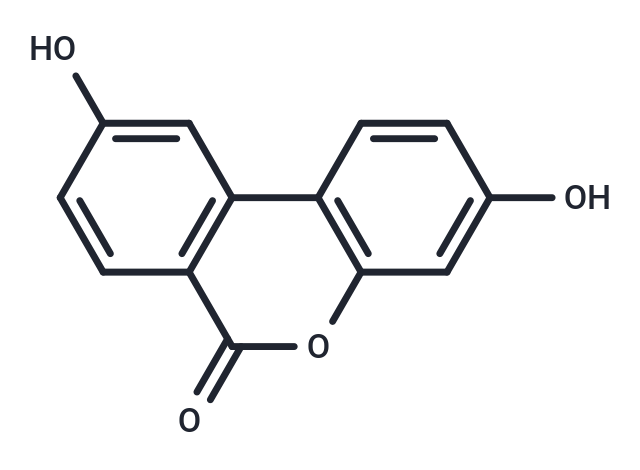
Isourolithin A
CAS No. 174023-48-4
Isourolithin A( —— )
Catalog No. M33079 CAS No. 174023-48-4
Isourolithin A is a naturally occurring compound found in a variety of plants, including parsley, celery and chamomile.
Purity : >98% (HPLC)
 COA
Datasheet
HNMR
HPLC
MSDS
Handing Instructions
COA
Datasheet
HNMR
HPLC
MSDS
Handing Instructions
| Size | Price / USD | Stock | Quantity |
| 5MG | 283 | In Stock |


|
| 10MG | 371 | In Stock |
|
| 25MG | 620 | In Stock |
|
| 50MG | 863 | In Stock |
|
| 100MG | 1172 | In Stock |
|
| 200MG | Get Quote | In Stock |
|
| 500MG | Get Quote | In Stock |
|
| 1G | Get Quote | In Stock |
|
Biological Information
-
Product NameIsourolithin A
-
NoteResearch use only, not for human use.
-
Brief DescriptionIsourolithin A is a naturally occurring compound found in a variety of plants, including parsley, celery and chamomile.
-
DescriptionIsourolithin A is a naturally occurring compound found in a variety of plants, including parsley, celery and chamomile. Isourolithin A is a member of the flavonoid family and is known for its antioxidant and anti-inflammatory properties.
-
In Vitro——
-
In Vivo——
-
Synonyms——
-
PathwayOthers
-
TargetOther Targets
-
RecptorOthers
-
Research Area——
-
Indication——
Chemical Information
-
CAS Number174023-48-4
-
Formula Weight228.2
-
Molecular FormulaC13H8O4
-
Purity>98% (HPLC)
-
Solubility——
-
SMILESOc1ccc2c(c1)oc(=O)c1ccc(O)cc21
-
Chemical Name——
Shipping & Storage Information
-
Storage(-20℃)
-
ShippingWith Ice Pack
-
Stability≥ 2 years
Reference
molnova catalog



related products
-
Varespladib methyl
Varespladib methyl, a bioavailable prodrug of Varespladib, is a selective group II secretory phospholipase A2 inhibitor.
-
1-O-Hexadecyl-Rac-Gl...
1-O-Hexadecyl-Rac-Glycerol is a marine derived natural products found in Tritoniella belli.
-
ADWX 1
Potent and selective KV1.3 channel blocker (IC50 values are 0.0019 and 0.65 nM for KV1.3 and KV1.1, respectively). Inhibits CD4+ CCR7- T cell activation. Ameliorates rat experimental autoimmune encephalomyelitis, in a model for multiple sclerosis.
