


 Cart
Cart
 sales@molnova.com


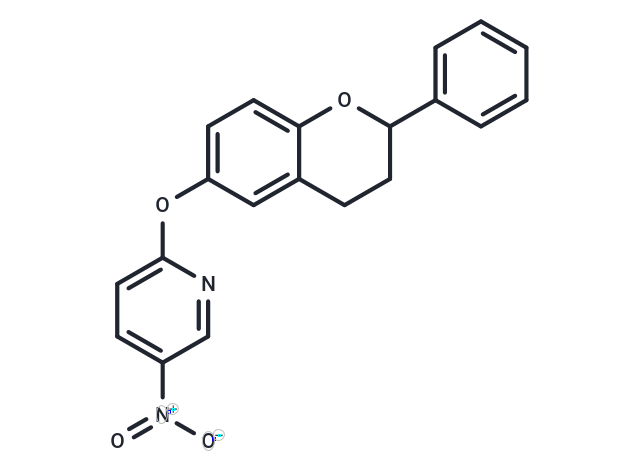
ORM-10103
CAS No. 488847-28-5
ORM-10103( —— )
Catalog No. M33047 CAS No. 488847-28-5
ORM-10103 is a novel potent and selective inhibitor of the Na+/Ca2+ exchanger (NCX).
Purity : >98% (HPLC)
 COA
Datasheet
HNMR
HPLC
MSDS
Handing Instructions
COA
Datasheet
HNMR
HPLC
MSDS
Handing Instructions
| Size | Price / USD | Stock | Quantity |
| 1 mL x 10 mM in DMSO | 87 | In Stock |


|
| 5MG | 79 | In Stock |
|
| 10MG | 130 | In Stock |
|
| 25MG | 277 | In Stock |
|
| 50MG | 436 | In Stock |
|
| 100MG | 591 | In Stock |
|
| 200MG | 799 | In Stock |
|
| 500MG | Get Quote | In Stock |
|
| 1G | Get Quote | In Stock |
|
Biological Information
-
Product NameORM-10103
-
NoteResearch use only, not for human use.
-
Brief DescriptionORM-10103 is a novel potent and selective inhibitor of the Na+/Ca2+ exchanger (NCX).
-
DescriptionORM-10103 is a specific inhibitor of the Na+/Ca2+ exchanger (NCX), which decreases the NCX current with estimated IC50s of 55 and 67 nM at -80 and at 20 mV, respectively.
-
In Vitro——
-
In Vivo——
-
Synonyms——
-
PathwayGPCR/G Protein
-
TargetCalcium Channel
-
RecptorCalcium Channel
-
Research Area——
-
Indication——
Chemical Information
-
CAS Number488847-28-5
-
Formula Weight348.35
-
Molecular FormulaC20H16N2O4
-
Purity>98% (HPLC)
-
SolubilityIn Vitro:?DMSO : 250 mg/mL (717.67 mM; Ultrasonic )
-
SMILES[O-][N+](=O)c1ccc(Oc2ccc3OC(CCc3c2)c2ccccc2)nc1
-
Chemical Name——
Shipping & Storage Information
-
Storage(-20℃)
-
ShippingWith Ice Pack
-
Stability≥ 2 years
Reference
1. Jost N, et al. ORM-10103, a novel specific inhibitor of the Na+/Ca2+ exchanger, decreases early and delayed afterdepolarizations in the canine heart. Br J Pharmacol. 2013 Oct;170(4):768-78.?
molnova catalog



related products
-
Stugeron
Cinnarizine is a drug derivative of piperazine, and characterized as an antihistamine and a calcium channel blocker.
-
McN5691
McN5691 (RWJ26240) is a voltage-dependent calcium channel blocker with antihypertensive activity that can be used in the study of diseases caused by vascular smooth muscle abnormalities.
-
Clopimozide
Clopimozide (R-29764) acts as a calcium channel antagonist and inhibits [3H] nilandipine binding.
