


 Cart
Cart
 sales@molnova.com


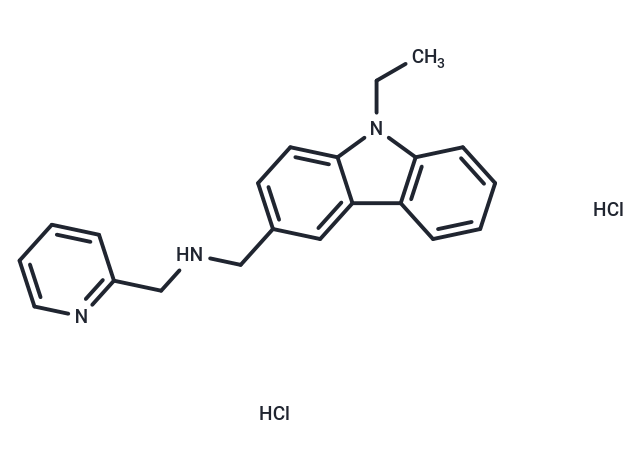
CMP-5 2HCl
CAS No. 2309409-79-6
CMP-5 2HCl( —— )
Catalog No. M32849 CAS No. 2309409-79-6
CMP-5 2HCl is a anthelmintic agent. CMP-5 2HCl shows EC100 of 5μM against H. contortus in vitro.
Purity : >98% (HPLC)
 COA
Datasheet
HNMR
HPLC
MSDS
Handing Instructions
COA
Datasheet
HNMR
HPLC
MSDS
Handing Instructions
| Size | Price / USD | Stock | Quantity |
| 1 mL x 10 mM in DMSO | 273 | In Stock |


|
| 5MG | 255 | In Stock |
|
| 10MG | 375 | In Stock |
|
| 25MG | 562 | In Stock |
|
| 50MG | 770 | In Stock |
|
| 100MG | 1051 | In Stock |
|
| 200MG | Get Quote | In Stock |
|
| 500MG | Get Quote | In Stock |
|
| 1G | Get Quote | In Stock |
|
Biological Information
-
Product NameCMP-5 2HCl
-
NoteResearch use only, not for human use.
-
Brief DescriptionCMP-5 2HCl is a anthelmintic agent. CMP-5 2HCl shows EC100 of 5μM against H. contortus in vitro.
-
DescriptionCMP-5 2HCl is a anthelmintic agent. CMP-5 2HCl shows EC100 of 5μM against H. contortus in vitro.
-
In Vitro——
-
In Vivo——
-
Synonyms——
-
PathwayOthers
-
TargetOther Targets
-
RecptorOthers
-
Research Area——
-
Indication——
Chemical Information
-
CAS Number2309409-79-6
-
Formula Weight388.33
-
Molecular FormulaC21H23Cl2N3
-
Purity>98% (HPLC)
-
Solubility——
-
SMILESCCN1C2=C(C=CC=C2)C3=CC(CNCC4=NC=CC=C4)=CC=C31.Cl.Cl
-
Chemical Name——
Shipping & Storage Information
-
Storage(-20℃)
-
ShippingWith Ice Pack
-
Stability≥ 2 years
Reference
molnova catalog



related products
-
Nootkatone
Nootkatone can prevent obesity and improve physical performance through AMPK activation in skeletal muscle and liver.
-
BFMO (biogenic Fe-Mn...
BFMO (biogenic Fe-Mn oxides, defined as a mixture of biogenic Mn oxide (BMO) and Fe oxide) could eliminate or decrease Fe(II), Mn(II), and As(III&V) species simultaneously.
-
PRRS-PQGAB-N
PRRS-PQGAB-N
