


 Cart
Cart
 sales@molnova.com


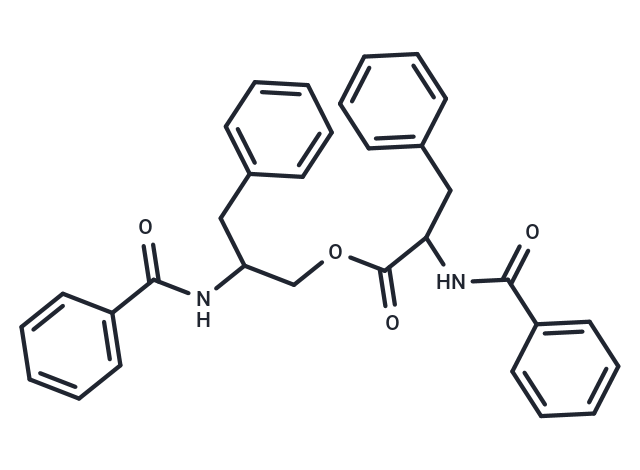
Asperphenamate
CAS No. 63631-36-7
Asperphenamate( —— )
Catalog No. M32791 CAS No. 63631-36-7
Asperphenamate is a fungal metabolite of Aspergillus flatiipes. The IC50s for T47D cells, MDA-MB-231 cells, and HL-60 cells are 92.3 μM, 96.5 μM, and 97.9 μM.
Purity : >98% (HPLC)
 COA
Datasheet
HNMR
HPLC
MSDS
Handing Instructions
COA
Datasheet
HNMR
HPLC
MSDS
Handing Instructions
| Size | Price / USD | Stock | Quantity |
| 1 mL x 10 mM in DMSO | 300 | In Stock |


|
| 5MG | 272 | In Stock |
|
| 10MG | 377 | In Stock |
|
| 25MG | 562 | In Stock |
|
| 50MG | 764 | In Stock |
|
| 100MG | 1032 | In Stock |
|
| 200MG | Get Quote | In Stock |
|
| 500MG | 2074 | In Stock |
|
| 1G | Get Quote | In Stock |
|
Biological Information
-
Product NameAsperphenamate
-
NoteResearch use only, not for human use.
-
Brief DescriptionAsperphenamate is a fungal metabolite of Aspergillus flatiipes. The IC50s for T47D cells, MDA-MB-231 cells, and HL-60 cells are 92.3 μM, 96.5 μM, and 97.9 μM.
-
DescriptionAsperphenamate, a fungal metabolite of Aspergillus flatiipes with anti-cancer effect, exhibits IC50 values of 92.3 μM, 96.5 μM and 97.9 μM in T47D, MDA-MB-231 and HL-60 cells, respectively.
-
In VitroAsperphenamate can inhibit cancer cell proliferation by fully inducing autophagy. asperphenamate showed inhibition effects against cathepsin L. At the same time, it also displayed weak inhibitory ability against cathepsin S.
-
In Vivo——
-
Synonyms——
-
PathwayMicrobiology/Virology
-
TargetAntifungal
-
RecptorAntifungal
-
Research Area——
-
Indication——
Chemical Information
-
CAS Number63631-36-7
-
Formula Weight506.59
-
Molecular FormulaC32H30N2O4
-
Purity>98% (HPLC)
-
SolubilityIn Vitro:?DMSO : 100 mg/mL (197.40 mM; Ultrasonic )
-
SMILESO=C(OC[C@H](Cc1ccccc1)NC(=O)c1ccccc1)[C@H](Cc1ccccc1)NC(=O)c1ccccc1
-
Chemical Name——
Shipping & Storage Information
-
Storage(-20℃)
-
ShippingWith Ice Pack
-
Stability≥ 2 years
Reference
1. Alice M.Clark, et al. Synthesis of asperphenamate, a novel fungal metabolite. Phytochemistry
molnova catalog



related products
-
Eberconazole Nitrate
Eberconazole Nitrate is an azole antifungal agent and broad-spectrum imidazole derivative.
-
4-Methylcinnamic aci...
4-Methylcinnamic acid, a Cinnamic acid analog, can be used as a intervention catalyst for overcoming antifungal tolerance. 4-Methylcinnamic acid can improve the potency of cell wall-disrupting agents.
-
Ceftriaxone
Ceftriaxone is a novel cephalosporin antibiotic with antimicrobial activity against most Gram-positive and Gram-negative bacteria.Ceftriaxone also exhibits anti-inflammatory and antioxidant activity.
