


 Cart
Cart
 sales@molnova.com


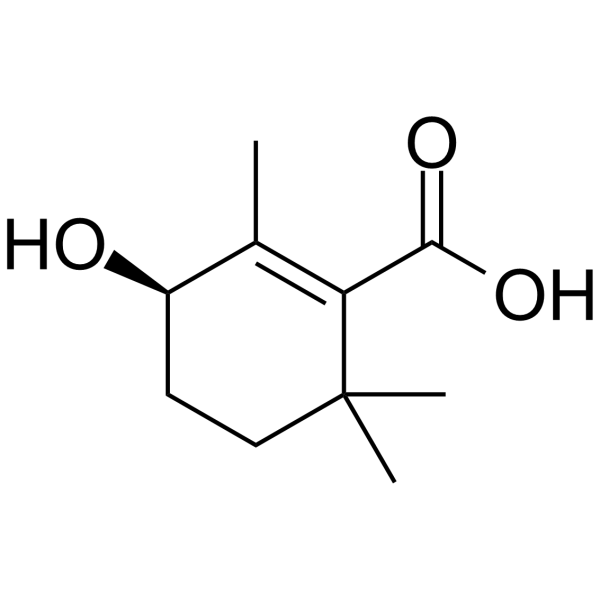
Rehmapicrogenin
CAS No. 135447-39-1
Rehmapicrogenin( —— )
Catalog No. M32309 CAS No. 135447-39-1
Rehmapicrogenin regulates the Nrf2/ARE signaling pathway. Nrf2/ARE signaling pathway is the most important pathway of oxidative stress.
Purity : >98% (HPLC)
 COA
Datasheet
HNMR
HPLC
MSDS
Handing Instructions
COA
Datasheet
HNMR
HPLC
MSDS
Handing Instructions
| Size | Price / USD | Stock | Quantity |
| 5MG | 1160 | In Stock |


|
| 50MG | Get Quote | In Stock |
|
| 100MG | Get Quote | In Stock |
|
| 200MG | Get Quote | In Stock |
|
| 500MG | Get Quote | In Stock |
|
| 1G | Get Quote | In Stock |
|
Biological Information
-
Product NameRehmapicrogenin
-
NoteResearch use only, not for human use.
-
Brief DescriptionRehmapicrogenin regulates the Nrf2/ARE signaling pathway. Nrf2/ARE signaling pathway is the most important pathway of oxidative stress.
-
DescriptionRehmapicrogenin regulates the Nrf2/ARE signaling pathway. Nrf2/ARE signaling pathway is the most important pathway of oxidative stress.
-
In Vitro——
-
In Vivo——
-
Synonyms——
-
PathwayOthers
-
TargetOther Targets
-
Recptor——
-
Research Area——
-
Indication——
Chemical Information
-
CAS Number135447-39-1
-
Formula Weight184.2
-
Molecular FormulaC10H16O3
-
Purity>98% (HPLC)
-
Solubility——
-
SMILES——
-
Chemical Name——
Shipping & Storage Information
-
Storage(-20℃)
-
ShippingWith Ice Pack
-
Stability≥ 2 years
Reference
molnova catalog



related products
-
GSK-1520489A
GSK-1520489A is an active PKMYT1 inhibitor.
-
SW157765
SW157765 is a selective glucose transporter GLUT8 (SLC2A8) inhibitor, a prodrug of many compounds, that selectively inhibits the uptake of fluorescent 2-deoxyglucose (2DG) in SW157765-sensitive cells in a dose-dependent manner, and can be used for the study of lung cancer.
-
Endokinin C (Human)
Endokinin C (Human)
