


 Cart
Cart
 sales@molnova.com


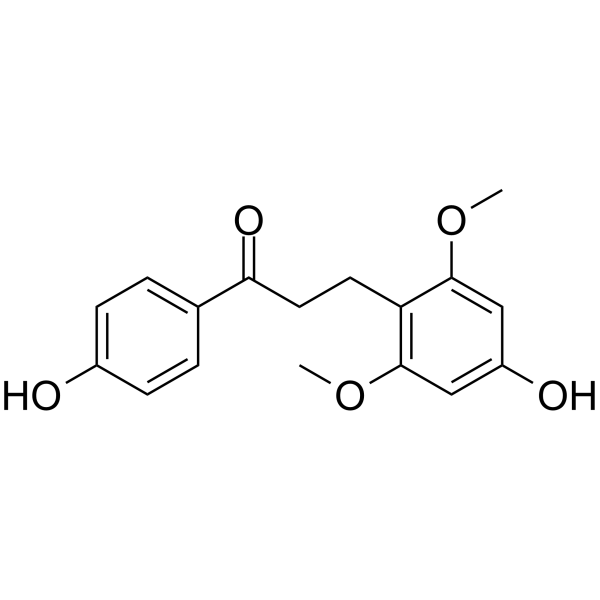
4,4-Dihydroxy-2,6-dimethoxydihydrochalcone
CAS No. 151752-08-8
4,4-Dihydroxy-2,6-dimethoxydihydrochalcone( —— )
Catalog No. M32290 CAS No. 151752-08-8
Loureirin D is isolated from the stem wood of Dracaena loureiri.
Purity : >98% (HPLC)
 COA
Datasheet
HNMR
HPLC
MSDS
Handing Instructions
COA
Datasheet
HNMR
HPLC
MSDS
Handing Instructions
| Size | Price / USD | Stock | Quantity |
| 1 mL x 10 mM in DMSO | 84 | In Stock |


|
| 5MG | 84 | In Stock |
|
| 100MG | Get Quote | In Stock |
|
| 200MG | Get Quote | In Stock |
|
| 500MG | Get Quote | In Stock |
|
| 1G | Get Quote | In Stock |
|
Biological Information
-
Product Name4,4-Dihydroxy-2,6-dimethoxydihydrochalcone
-
NoteResearch use only, not for human use.
-
Brief DescriptionLoureirin D is isolated from the stem wood of Dracaena loureiri.
-
DescriptionLoureirin D is isolated from the stem wood of Dracaena loureiri.
-
In Vitro——
-
In Vivo——
-
Synonyms——
-
PathwayOthers
-
TargetOther Targets
-
Recptor——
-
Research Area——
-
Indication——
Chemical Information
-
CAS Number151752-08-8
-
Formula Weight302.3
-
Molecular FormulaC17H18O5
-
Purity>98% (HPLC)
-
Solubility——
-
SMILES——
-
Chemical Name——
Shipping & Storage Information
-
Storage(-20℃)
-
ShippingWith Ice Pack
-
Stability≥ 2 years
Reference
molnova catalog



related products
-
Chrysophanol 8-O-glu...
Chrysophanol 8-O-glucoside and chrysophanol have mild cytotoxicity and anti-diabetic properties and can play metabolic roles in the insulin-stimulated glucose transport pathway.
-
Compound 10w
Compound 10w, a substituted pyrazolo[1,5-a]pyrimidinamide compound, is a ZSTK474 analog that shows anticancer activity against HeLa cells.
-
N-[2-nitro-4-(triflu...
N-[2-nitro-4-(trifluoromethyl)phenyl]piperazine is a biologically active compound belonging to the piperazine group.
