


 Cart
Cart
 sales@molnova.com


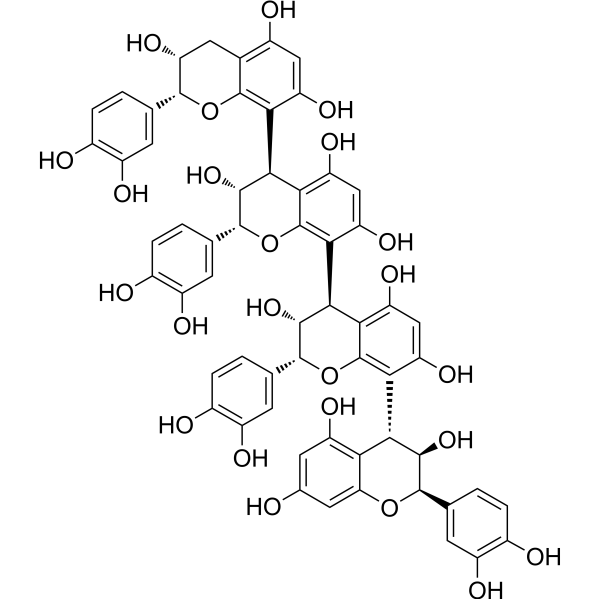
Cinnamtannin A2
CAS No. 86631-38-1
Cinnamtannin A2( —— )
Catalog No. M32135 CAS No. 86631-38-1
Cinnamtannin A2, a tetrameric procyanidin, enhances GLP-1 and insulin secretion in mice while also upregulating the expression of corticotrophin releasing hormone.
Purity : >98% (HPLC)
 COA
Datasheet
HNMR
HPLC
MSDS
Handing Instructions
COA
Datasheet
HNMR
HPLC
MSDS
Handing Instructions
| Size | Price / USD | Stock | Quantity |
| 5MG | 873 | In Stock |


|
| 50MG | Get Quote | In Stock |
|
| 100MG | Get Quote | In Stock |
|
| 200MG | Get Quote | In Stock |
|
| 500MG | Get Quote | In Stock |
|
| 1G | Get Quote | In Stock |
|
Biological Information
-
Product NameCinnamtannin A2
-
NoteResearch use only, not for human use.
-
Brief DescriptionCinnamtannin A2, a tetrameric procyanidin, enhances GLP-1 and insulin secretion in mice while also upregulating the expression of corticotrophin releasing hormone.
-
DescriptionCinnamtannin A2, a tetrameric procyanidin, enhances GLP-1 and insulin secretion in mice while also upregulating the expression of corticotrophin releasing hormone. Additionally, Cinnamtannin A2 exhibits antioxidant, anti-diabetic, and nephroprotective effects.
-
In VitroCinnamtannin A2 (0.125-2.0 μg/mL) inhibits LDL oxidation induced by copper ions or MeO-AMVN.
-
In VivoCinnamtannin A2 (10 mg/kg; i.p. for 30 days) ameliorates the level of KIM1 and NAGL in 5/6 nephractomized rats by regulating Nrf2- Keap1 pathway.Cinnamtannin A2 (10 μg/kg; p.o.) increases the secretion of insulin and glucagon-like peptide-1 (GLP-1) in plasma of mice. Cinnamtannin A2 (10 μg/kg; p.o.) significantly promotes phosphorylation of both IRB and IRS-1 in mice. Animal Model:Male Sprague-Dawley rats (250-300 g) were induced chronic renal failure (CRF) by removing the kidneys Dosage:10 mg/kg Administration:I.p. for 30 days Result:Ameliorated the altered level of creatinine, blood urea nitrogen, Neutrophil gelatinase-associated lipocalin, Kidney Injury Molecule-1 and cytokines in the serum and microalbuminurea.Reduced the oxidative stress level.Attenuated the altered expression of proteins involved in Nrf2-Keap1 pathway in the kidney tissue.Reduced the tubular injury score in the kidney tissue.
-
Synonyms——
-
PathwayOthers
-
TargetOther Targets
-
Recptor——
-
Research Area——
-
Indication——
Chemical Information
-
CAS Number86631-38-1
-
Formula Weight1155.1
-
Molecular FormulaC60H50O24
-
Purity>98% (HPLC)
-
Solubility——
-
SMILES——
-
Chemical Name——
Shipping & Storage Information
-
Storage(-20℃)
-
ShippingWith Ice Pack
-
Stability≥ 2 years
Reference
molnova catalog



related products
-
H-Phe(4-Cl)-D-Cys-β-...
PRL 3195 is a somatostatin receptor antagonist with Kis of 6, 17, 66, 1000 and 1000 nM for human somatostatin receptors (sst5, sst2, sst3, sst1 and sst4, respectively).
-
LysoPC(14:0/0:0)
LysoPC(14:0/0:0) is a lysophospholipid (LyP) and mono-glycerophospholipid.
-
Jineol
Jineol is a quinoline alkaloid from Scolopendra subspinipes. Jineol shows cytotoxic activity against the growth of human tumor cell lines in vitro.
